Category Archives: Vietnam War

Phuoc Vinh UFO


1969 sighting on the Green-line

As if we didn’t have enough to worry about while in Vietnam; here’s a GI that claims he spotted a UFO while pulling guard duty on Phuoc Vinh’s perimeter.

Full Description of Event/Sighting: I was pulling Green-line duty with 3 other 1st Cav. soldiers who were sleeping. I had a star light scope, a radio and all the stuff you would expect in/on a bunker. This bunker was a big well fortified bunker. We were all on top of this bunker from my best recollection. I was pulling my stint, let the others sleep. This bunker was on the western facing perimeter. This night was a beautiful night with no overcast. Many small brilliant stars were in the night sky. No moon, as far as I remember especially facing out west. The starlight scope was working very well. I’m going into a little detail to set the stage leading up to my sighting. I know it’s not to the point Please bear with me.

As I was scanning the western night sky. and all of a sudden something to the Northwest caught my eye. It was a very brilliant whitish, silver and with a hint of blue more of a rounded shape. It was fairly far away. The main thing about this object was it would move to my left, or South in jerky movements , hover, do it again and again. It never lost the same brilliance or colors the entire time. Additionally it left a amber or reddish trail (like a tracer) as it moved only to suddenly stop on a dime. I watched this thing for several minutes.

By this time it was in the Southern Horizon. Then, all of a sudden it shot up skyward on a 45 degree angle towards the North. It was totally out of sight in seconds. I was thinking should I report this? I decided not. I would wait to see if anyone else would, then I would to. I didn’t have the presence of mine to wake the other guys. Mainly, I couldn’t believe what I was seeing.

11 Comments

Filed under Vietnam War

Phuoc Vinh Ground Zero


In Our Water

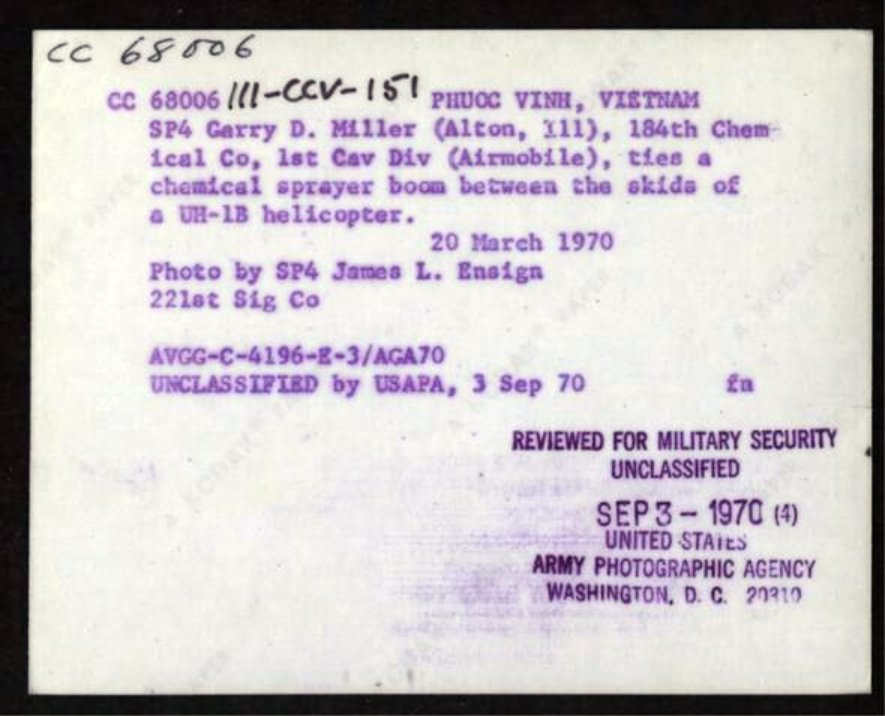
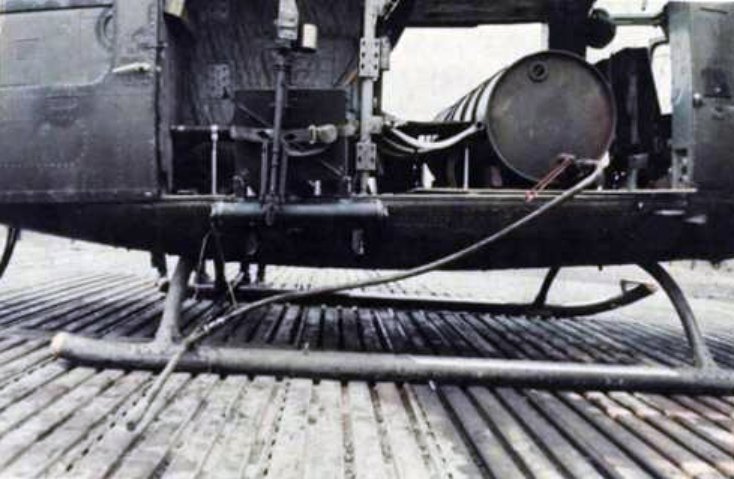
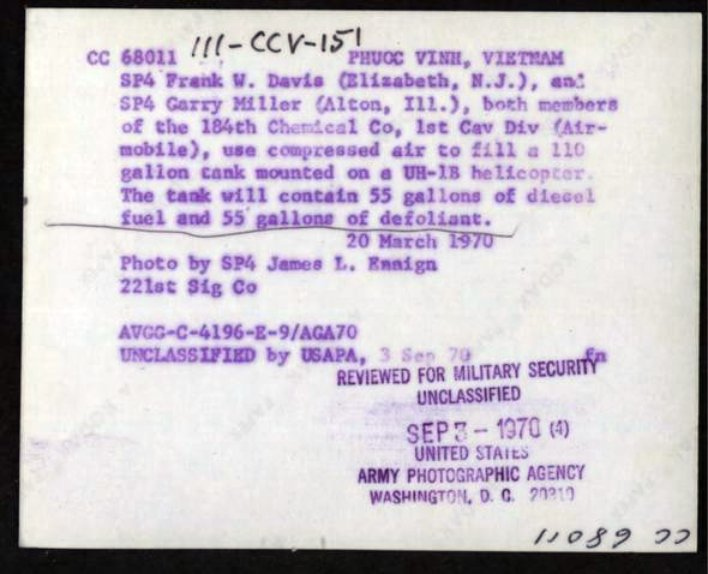
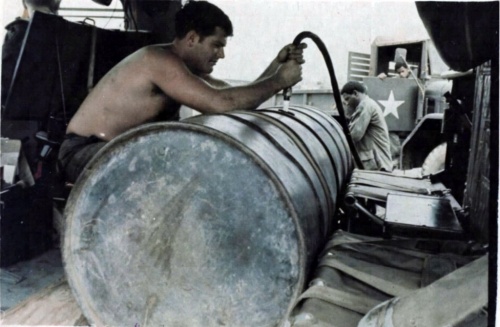
When you consider that we LIVED there, (ate, drank & sleep) with an open tank for the drinking and cooking water, slogging through the mud during the rainy season; could we really avoid exposure?

The veterans who were physically present at Phuoc Vinh Groundwater Zero are, undoubtedly, the most likely to show high level body-burdens of the compounds, even today. Why haven’t we tested the veterans who were subjected to the heaviest and most continuous contamination? Thousands of these soldiers can indeed be found today, through service organizations and the various grassroots networks addressing this issue.

Establishing a group of veterans subjected to high levels of exposure, by evidence of Dioxin (2378 TCDD) testing, and THEN studying these epidemiologically will get at the truth of the matter. The results of blood or tissue analysis of these veterans of Ground Zero will definitively show very high levels of exposure. An additional survey of the medical histories of deceased veterans of Phuoc Vinh will provide STARTLING data.

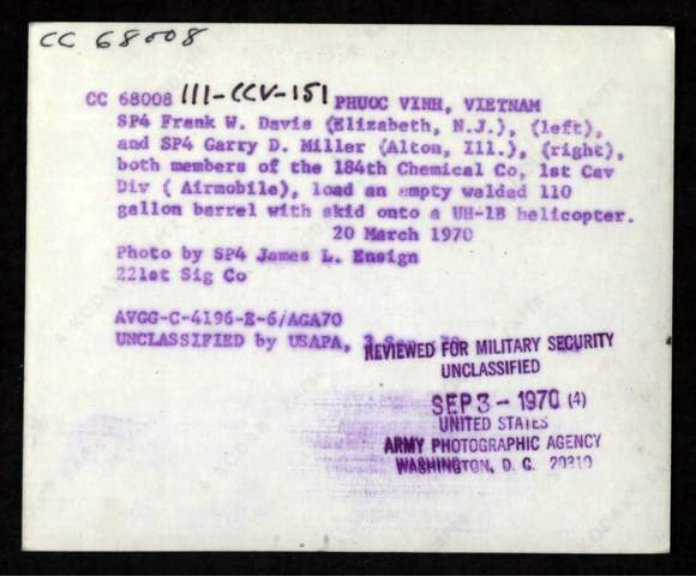
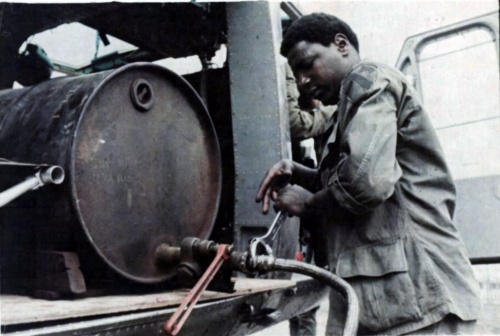
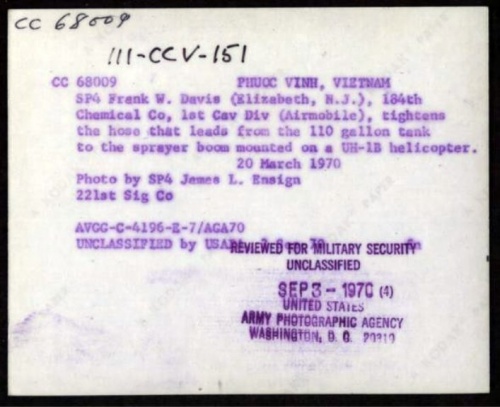
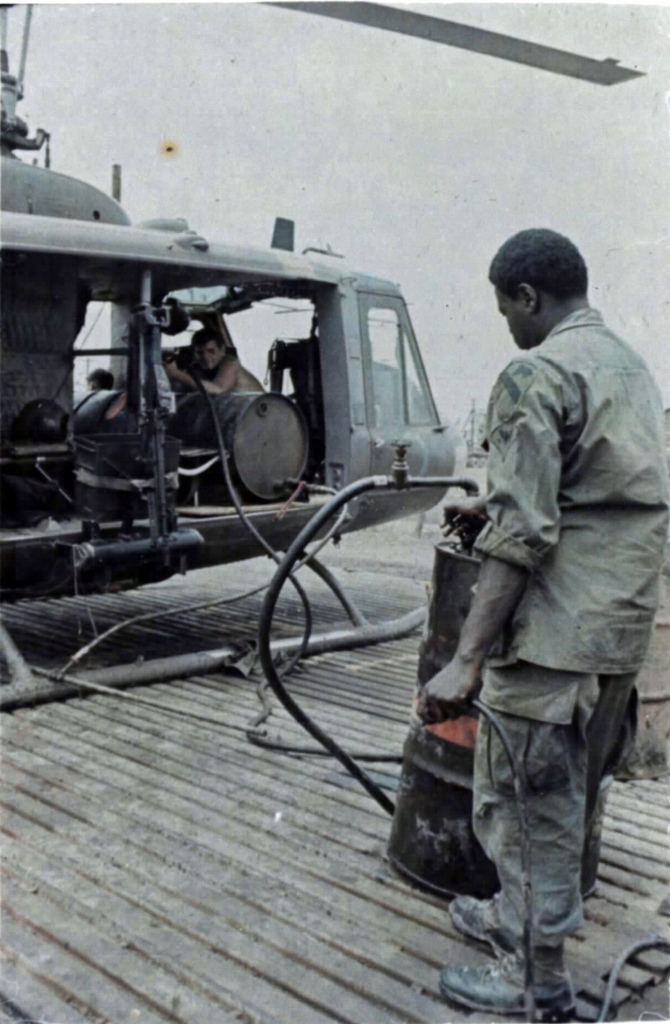
A year ago I was diagnosed with actinic keratosis, a precancerous skin condition and a cancerous spot (squamous-cell carcinoma) was surgically removed. Whether my skin condition is linked to the thirteen months, I spent in Phuoc Vinh and surrounding areas remains to be seen…

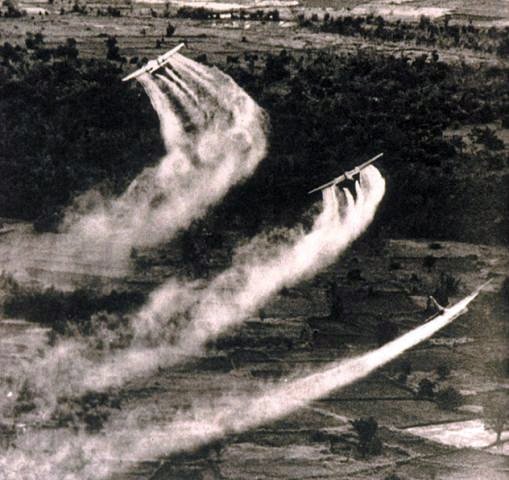
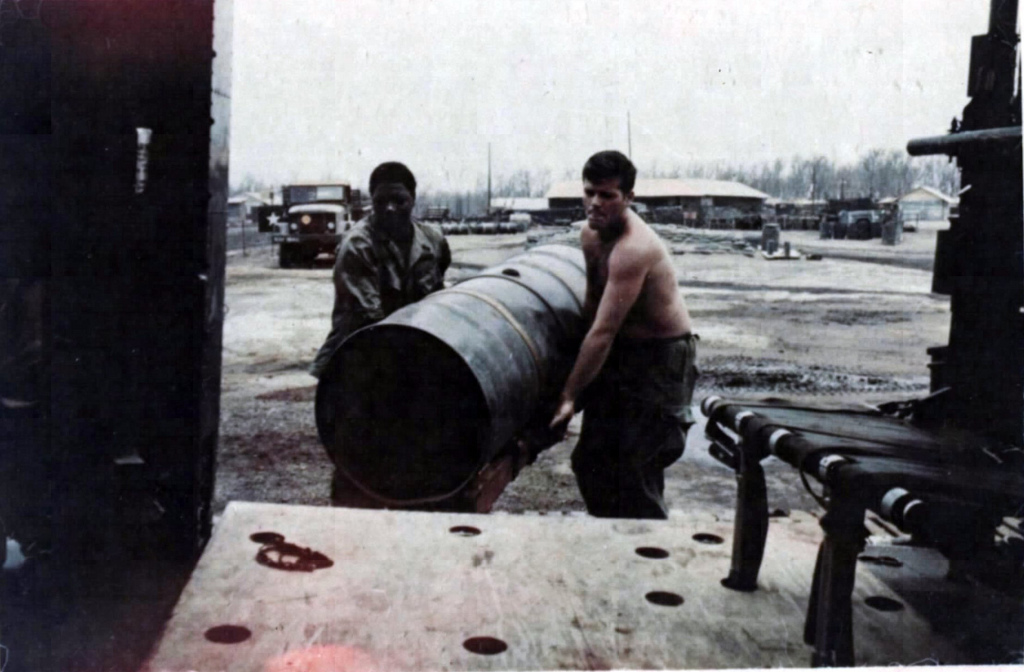
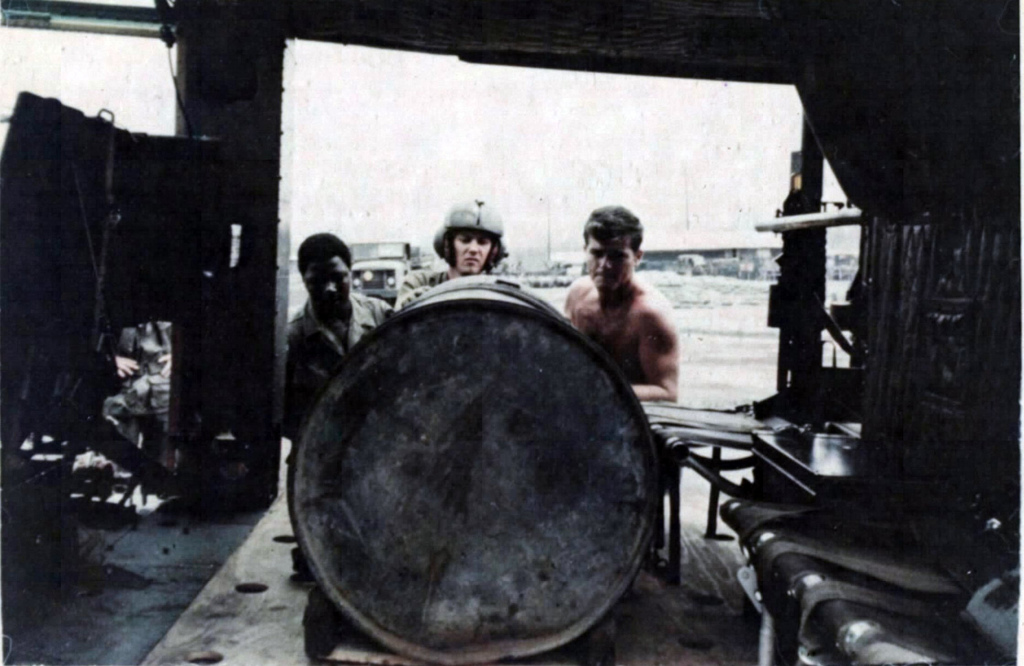
Agent Orange, named after the color of the stripe on the barrels in which the defoliant sprayed by American forces during the Vietnam War was stored, contained tetrachlorodibenzop dioxin (known as TCDD), one of the most poisonous chemicals ever made by man.

The following is an Agent Orange study done by Gregg Knowlton:

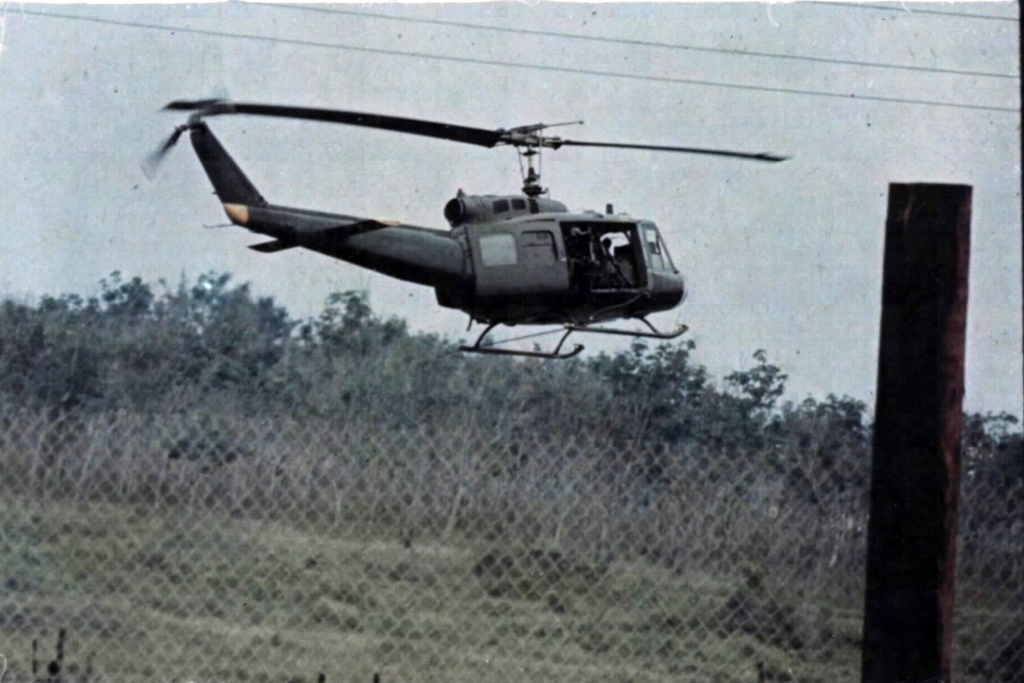
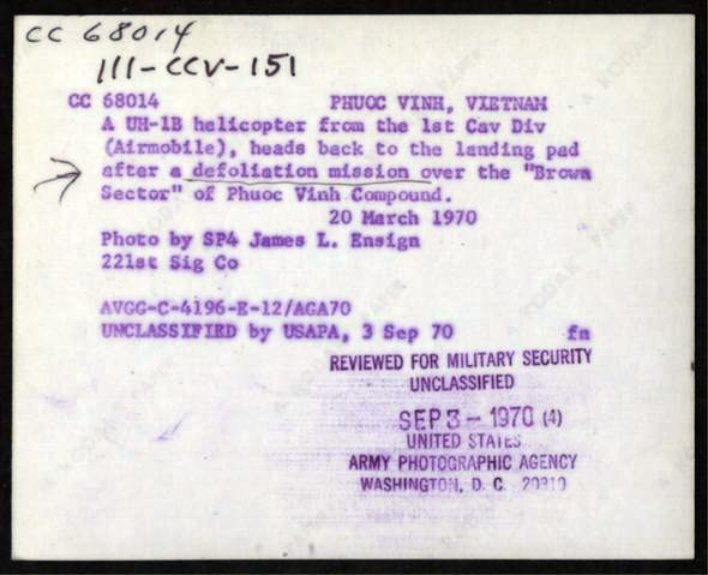
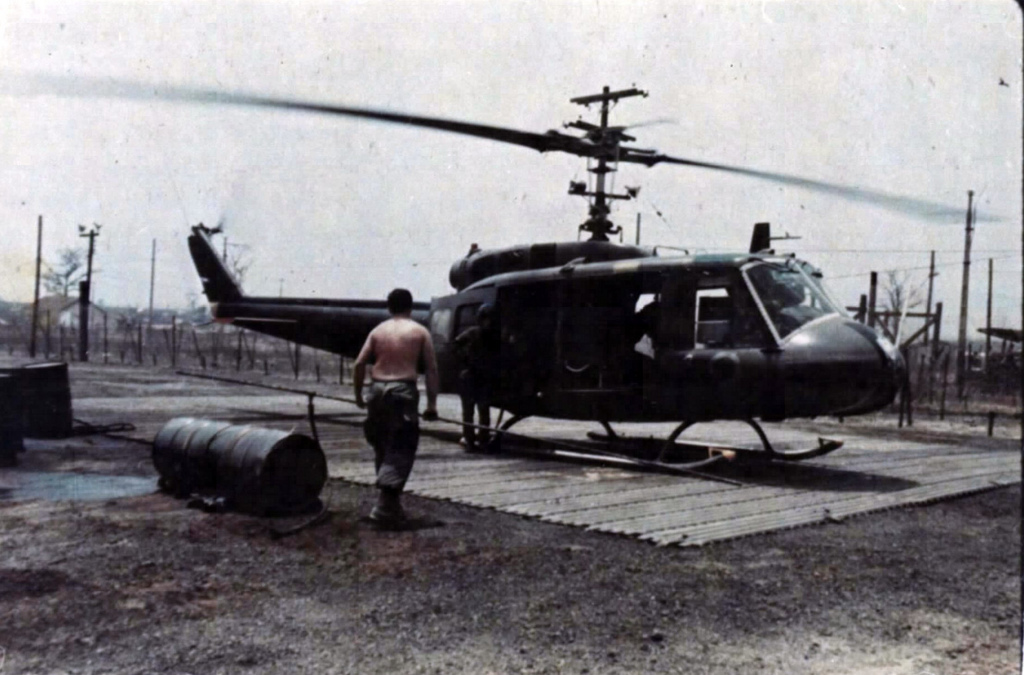
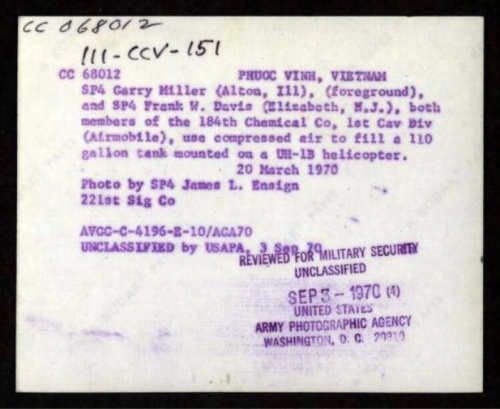
The following photos are from “fold3” a collection of original military records

<a

250 Comments

Filed under Vietnam War

TIME Collection: The Vietnam War


Photojournalism

AS A NATION THERE IS PLENTY we might learn from Viet Nam,” wrote TIME’s editor-in-chief Hedley Donovan in 1971 as the war raged on after ten years of fighting and tens of thousands of American soldiers killed. It is important for Americans today to understand the fear of communism that provoked America’s initial involvement in Southeast Asia and to be aware of the political decisions and deceptions that shaped the relentless war in Vietnam. Use the TIME Archive to catch up on your history and to ask which lessons learned from the Vietnam War apply today in Iraq.

April 4, 1955

The beleaguered man sat in Freedom Palace, small, chunky, tan-tinted and surrounded by a few intimate possessions—a wooden crucifix, a picture of the Virgin, a slide projector, a gaudy spittoon, books entitled Social Justice and Thought of Gandhi. Before him on a shabby desk lay an ultimatum, a blunt threat to tear down the government of South Viet Nam. An odd procession passed in and out of the palace doors for hours on end to deal with the crisis—three of the man’s brothers, one in the cloth of a Roman Catholic bishop; his beautiful, politics-minded sister-in-law; U.S. diplomats and U.S. military officers in mufti; eye-rubbing ministers of state summoned from their sleep for emergency consultations.

August 9, 1963

The history of Viet Nam is full of heroines. Women often served as generals. In the 1st century A.D., the Trung sisters raised an army and started a rebellion against Viet Nam’s Chinese overlords; one of their female commanders gave birth to a child on the battlefield, then strapping her infant on her back and brandishing a sword in each hand, led her troops against the Chinese. In 248, a 23-year-old girl put on a suit of golden armor, climbed on the back of an elephant, and led her army into the field against Viet Nam’s foreign invaders.

August 7, 1964

“Communists are the aggressors, not us,” insists Khanh. “If we were to go back to the north, it should be termed a counterattack.” The U.S., hoping to avoid a direct attack on North Viet Nam as long as possible, was vexed at Khanh’s cries but in a way sympathetic, for his outburst reflected the frustrations of a people who have been at war for the better part of two decades.
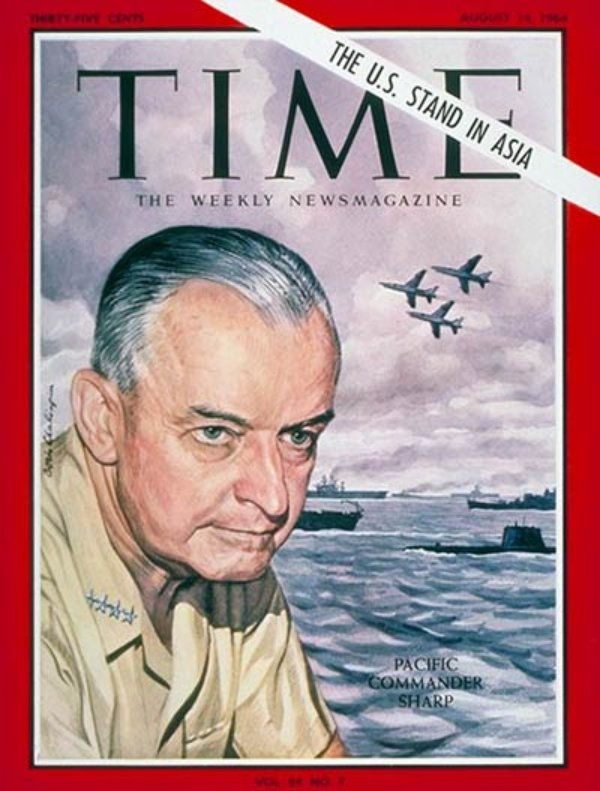
August 14, 1964

The Gulf of Tonkin is a forbidding body of water. Along its shores lie the brutal war in South Viet Nam, the belligerent Red regime of North Viet Nam’s Ho Chi Minh, the ominous expanse of Communist China.

February 19, 1965

“The war has quite obviously moved into another stage,” said Westmoreland in visible relief. “Now the rules of war have changed, and policymakers in Hanoi are confronted with the necessity of balancing their resources against the damage they may suffer. They’ve got to take a look down that long road and decide whether they really want what lies ahead for them if they persist in past policies.”
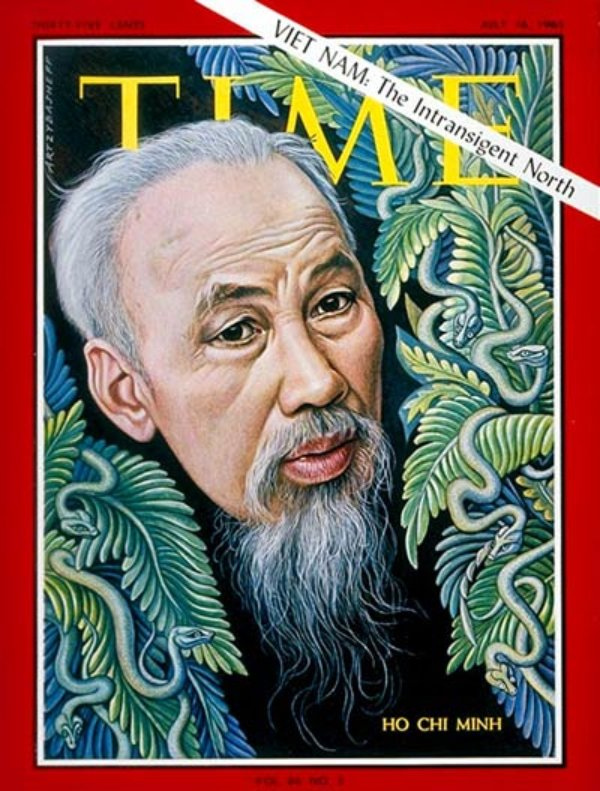
July 16, 1965

The Men from Uncle. Hanoi last week was ready for total war. So was Ho Chi Minh, the goat-bearded god of Vietnamese Communism and, at 75, Asia’s oldest, canniest Red leader. North Viet Nam’s Ho was making his last and most steely stand, and his young country seemed ready to win or die with him.
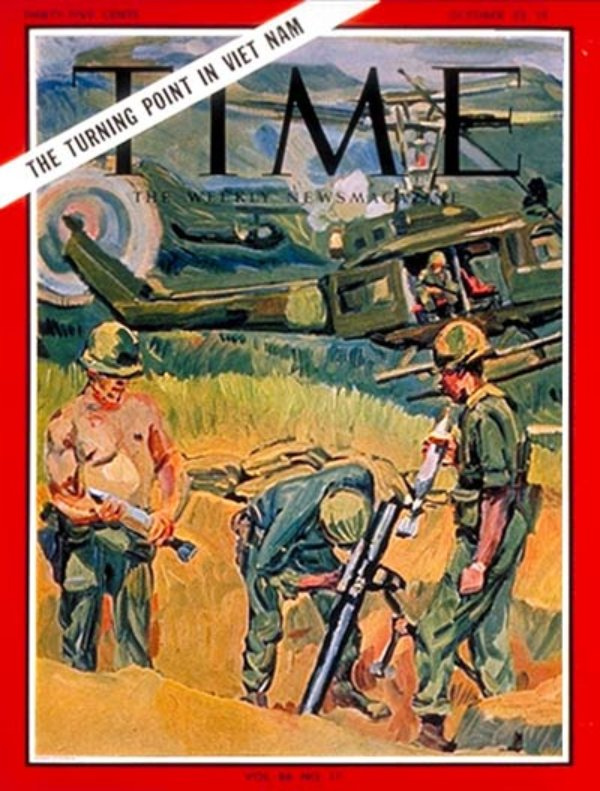
October 22, 1965

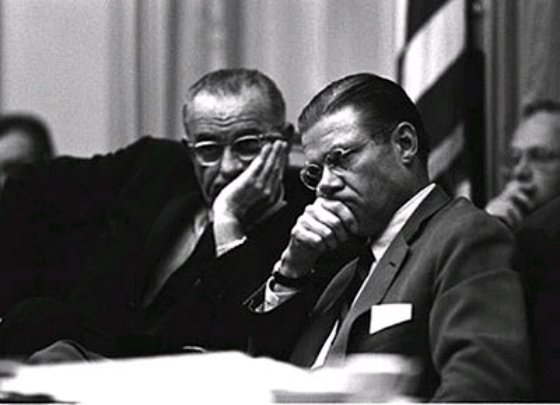
“We Will Stand.” It was late July when the President of the U.S. summoned his aides to a three-day secret session to deliberate Viet Nam. Just back from Saigon was Defense Secretary Robert McNamara with the grim prognosis of peril. When Johnson announced his decision, it was the most significant for American foreign policy since the Korean War: “We will stand in Viet Nam.” To stand meant in fact that the U.S. would go to Viet Nam in overwhelming force and stay until the job was done. Why? “If we are driven from the field in Viet Nam,” the President told the nation and the world, “then no nation can ever again have the same confidence in American promise or in American protection.”
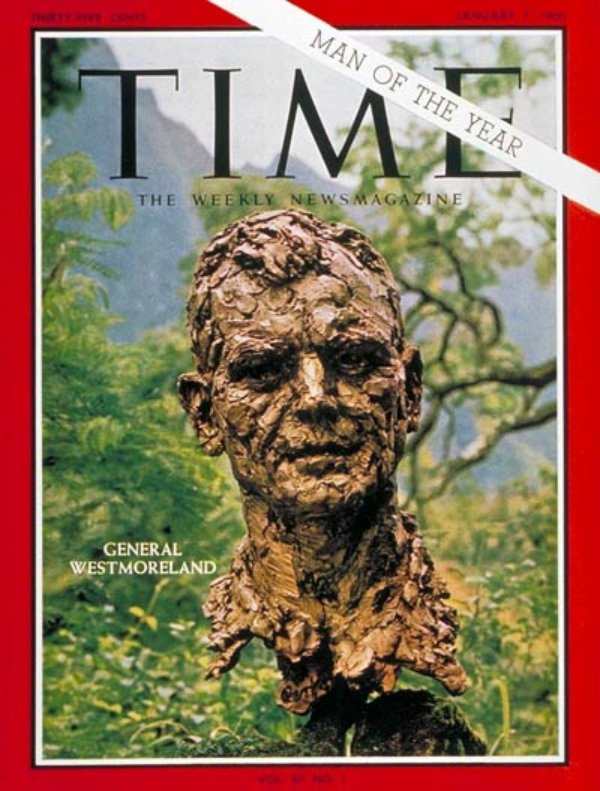
January 7, 1966

As commander of all U.S. forces in South Viet Nam, General William Childs Westmoreland, 51, directed the historic buildup, drew up the battle plans, and infused the 190,000 men under him with his own idealistic view of U.S. aims and responsibilities. He was the sinewy personification of the American fighting man in 1965 who, through the monsoon mud of nameless hamlets, amidst the swirling sand of seagirt enclaves, atop the jungled mountains of the Annamese Cordillera, served as the instrument of U.S. policy, quietly en during the terror and discomfort of a conflict that was not yet a war, on a battlefield that was all no man’s land.
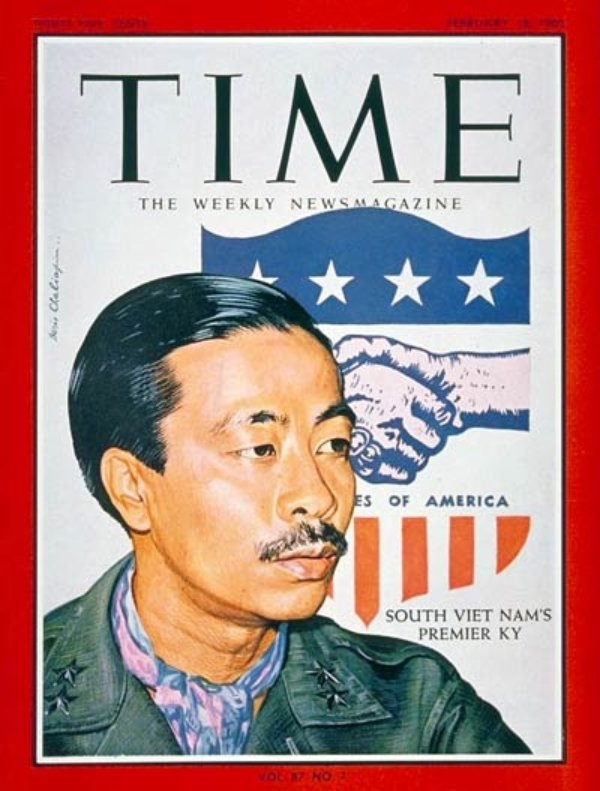
February 18, 1966

In his eight months as Premier, South Viet Nam’s Nguyen Cao Ky had best been known as an atavistic aviator-the flamboyant, Von Richthofen-like figure of a fighter pilot, replete with mustache and a wisp of lavender silk knotted at his throat. Followers of Viet Nam’s recent raucous history could argue for hours over whether he was the sixth or ninth Premier in the last 18 months; few took a close look at Ky and his accomplishments. But under the spotlight of Lyndon Johnson’s U.S.-Vietnamese summit in Honolulu, the highflying aviator finally came down to earth.

June 3, 1966

The letter bore the nominal heading “The President of the United States.” It was addressed to Gary William Wilson, and it arrived at the blue stucco house in Rosemead, Calif., two days before Christmas. Its terms were cold, its message unmistakable. “Greeting: You are hereby ordered for induction into the Armed Forces of the United States.”
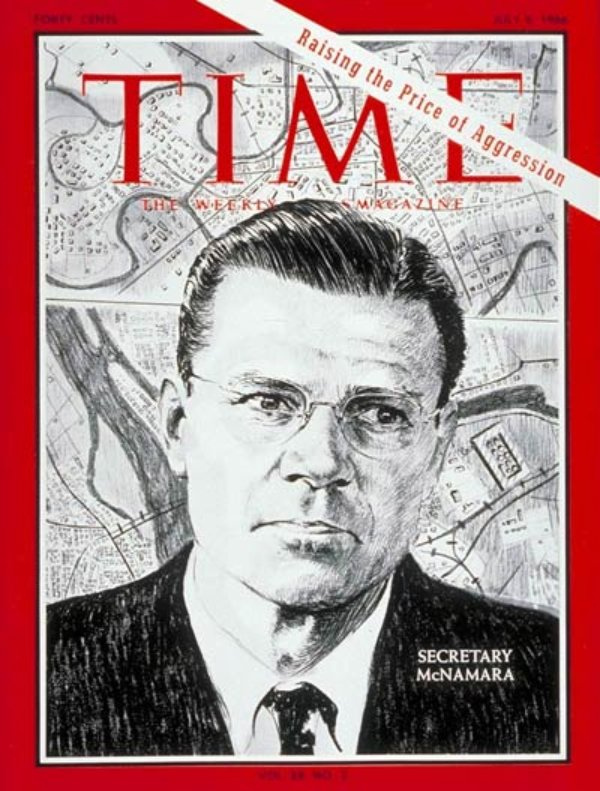
July 8, 1966

It was siesta time in Viet Nam’s clammy cities as the droop-nosed F-4 Phantom jets snapped off the U.S.S. Ranger’s dipping flight deck. Next into the crystalline sky burst four flights of A-4 Skyhawks. Then the mission, 45 planes strong, streaked low across the Gulf of Tonkin toward the craggy, familiar coastline of North Viet Nam—and a target never before attacked by American pilots.

August 25, 1967

Viet Nam is for men with double vision. There has never been a war quite like it. Tt is two kinds of combat against a two-faced enemy, and the combination is deadly. One fight pits the U.S. and its allies against North Vietnamese and main-force Viet Cong regular soldiers whose primary mission is as old as war itself: to kill and maim the opposing armies. The second fight is waged by a second enemy, the clandestine Viet Cong guerrilla. His uniform is the peasant’s black pajamas, and his mission is a Communist innovation: to steal people as well as territory away from the South Vietnamese government.
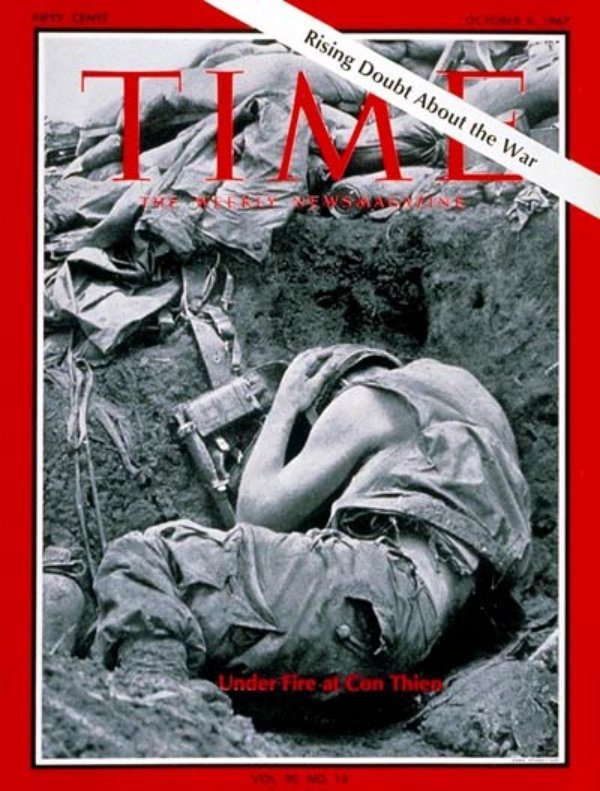
October 6, 1967

Dangerous Detonations. In the U.S., 10,000 miles away, Con Thien dramatized all the cumulative frustrations of the painful war. A long-rising surge of doubt about Viet Nam was intensified for Americans as the bloody, muddy ordeal of Con Thien flickered across the TV screen. With total U.S. casualties nearing 100,000 since 1961, with the war’s cost running at $24 billion a year and with rumors circulating on Capitol Hill that Lyndon Johnson may need $4 billion more before the end of 1967, there was a measurable increase in American unease and impatience.
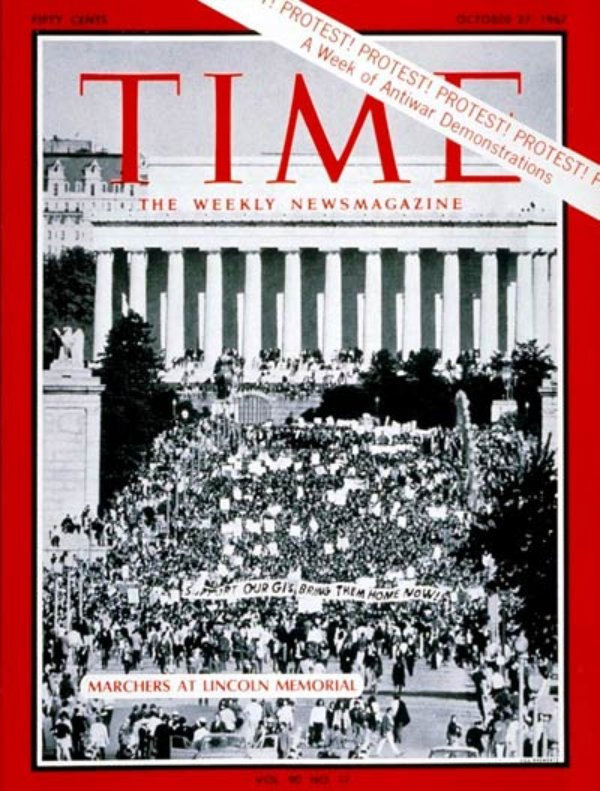
October 27, 1967

Troops of the 82nd Airborne Division—many of them Viet Nam veterans—waited outside the capital in case they should be needed. Police monitored the highways leading into Washington, looking for a chance to nip violence in the bud. All together, there were 8,500 men on hand to quell the demonstrators if necessary. On the Pentagon roofs, federal marshals, Defense Department guards and Army riflemen crouched uneasily, weapons at hand, radios at the ready, field glasses constantly scanning the ground below, while helicopters fluttered overhead with cameras clicking.

April 12, 1968

LYNDON JOHNSON’S renunciation of a second term as President dumfounded all but a score of relatives and top aides, who suspected that it might be coming. It was not included in the advance text of his bombing-pause speech. Only an hour before he went before the television cameras did he order a U.S. Army Signal Corps man to put his climactic words on the TelePrompTers. Even then, Johnson said, “I’m not going to know probably until I get in there whether I’m going to use that speech.”

April 19, 1968

Even as Washington and Hanoi conducted the delicate diplomatic exchanges that could lead to negotiations, the U.S. last week announced a major shift in the strategy of the Viet Nam war and named a new commander to carry it out. The strategy, set forth in his first press conference by Defense Secretary Clark Clifford, is a decision by the U.S. to turn the war gradually over to the South Vietnamese and to give them the firepower and backing to wage it effectively. The new man in Viet Nam is General Creighton W. (“Abe”) Abrams, 53, who will succeed General William C. West moreland, soon to return to Washington as Army Chief of Staff.

June 20, 1969

WHEN the President’s Midway announcement crackled over transistor radios tuned to the Armed Forces Viet Nam Network last week, few G.I.s even paused in their tasks to listen to it. Rumors of troop withdrawals had been making the rounds in the war zone since peace talks got under way in Paris a year ago; when nothing happened, the results were skepticism and indifference.
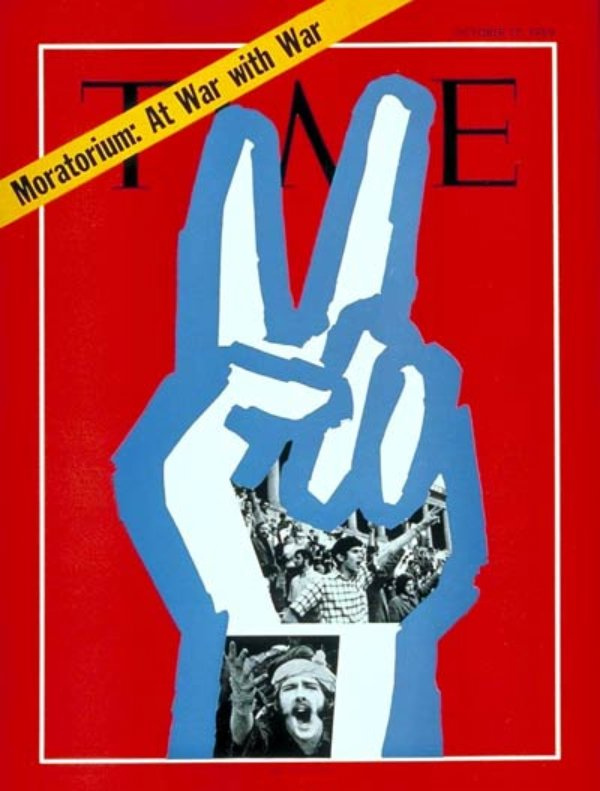
October 17, 1969

MORATORIUM” was scarcely a household word a couple of months ago. The dictionary definition is “a period of permissive or obligatory delay,” and to most people it meant a pause in paying one’s debts or in talking. Now, suddenly, “moratorium” has become the focus of national attention in its special 1969 sense: M-day, Oct. 15, a movement intended by its organizers and supporters to show the Nixon Administration that large and growing numbers of Americans want out of the Viet Nam war as fast as possible.
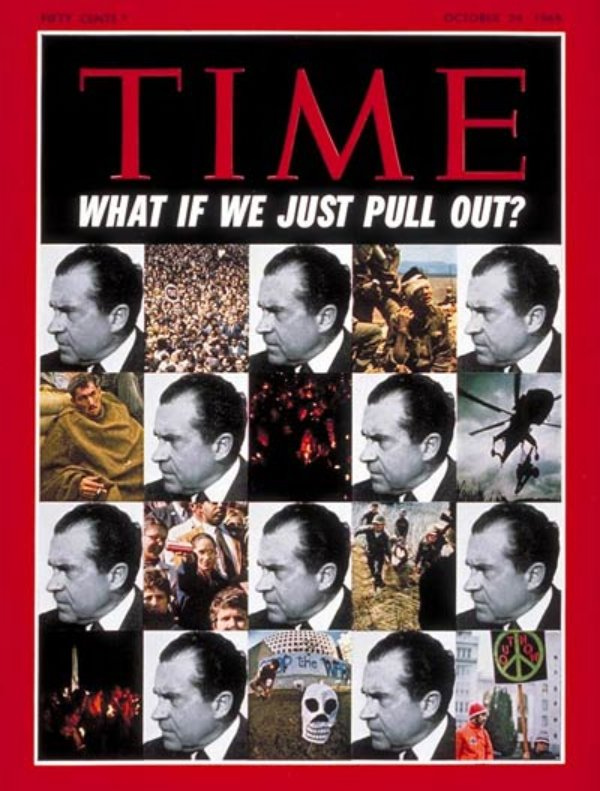
October 24, 1969

THEIR numbers were not overwhelming. Probably not many more than 1,000,000 Americans took an active part in last week’s Moratorium Day demonstrations against the Viet Nam war; that is barely half of 1 % of the U.S. population. Yet M-day 1969 was a peaceful protest without precedent in American history because of who the participants were and how they went about it. It was a calm, measured and heavily middle-class statement of weariness with the war that brought the generations together in a kind of sedate Woodstock Festival of peace.
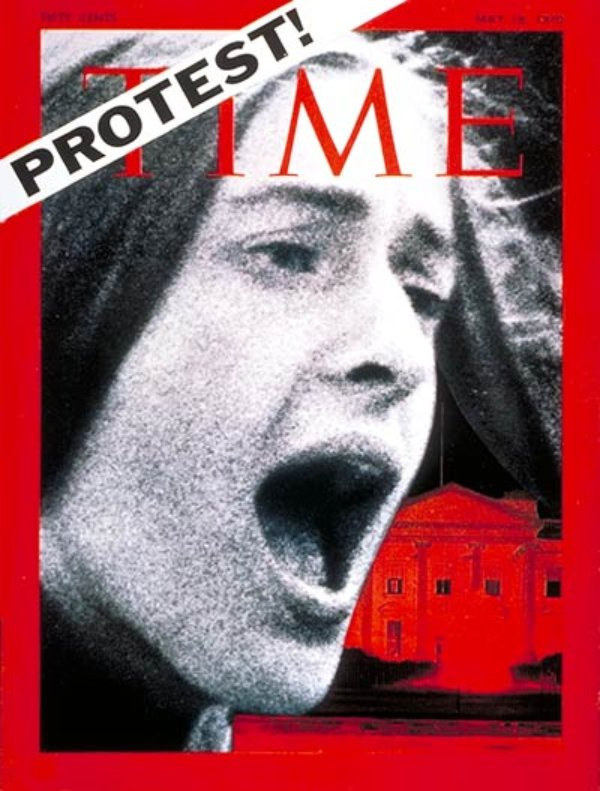
May 18, 1970

Both the eruption of protest and the reaction to it mocked Nixon’s still unfulfilled promise to lead the nation “forward together.” Not only were there rending, sometimes bloody clashes between peace demonstrators and peace officers, but a scattering of vicious brawls set citizen against citizen as well.
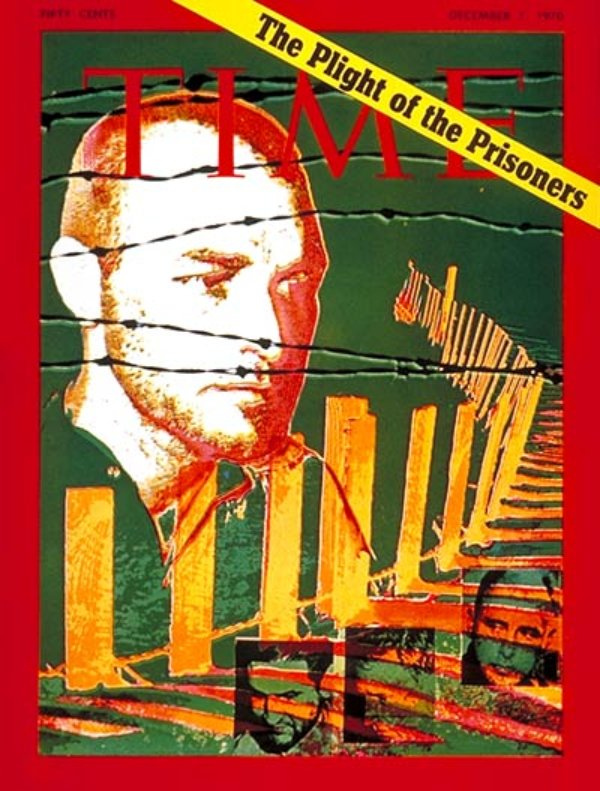
Dec. 7, 1970

On Oct. 7, President Nixon proposed “the immediate and unconditional release of all prisoners of war held by both sides.” (Laird said last week that Saigon holds 35,000 P.O.W.s to the enemy’s 3,000.) When that got no response, the U.S. turned again to the Ivory Coast alternative.
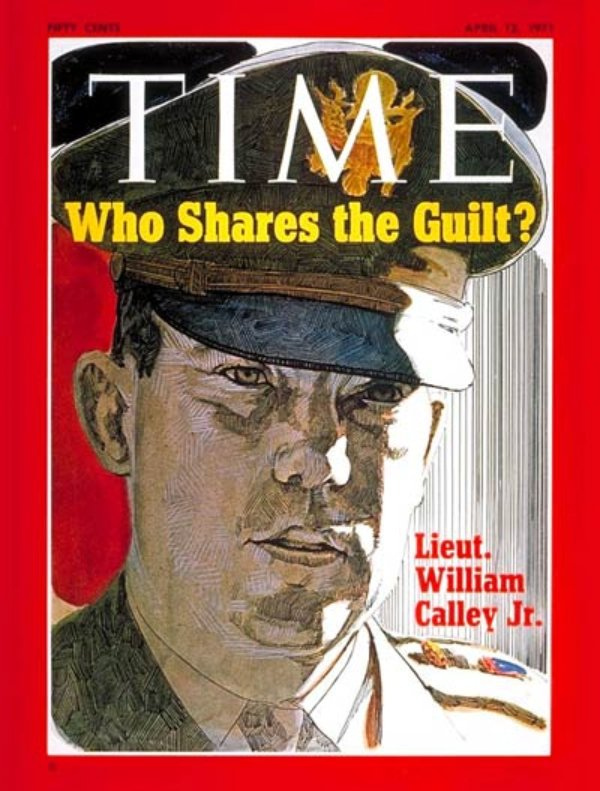
April 12, 1971

LEUT. WILLIAM CALLEY’S secretary, Mrs. Shirley Sewell, had just come back to his apartment with the 1971 tags for Calley’s Volkswagen and motorboat. Calley had just got up from a nap when Captain Brooks Doyle Jr., his young deputy military counsel, walked through the door. “They’ve got a verdict, Rusty,” Doyle said. Calley stopped in his tracks, his face a mask of fear, his right fist pounding into his left palm. “So they’re finally ready,” he mumbled, turning into the bedroom to don his Army greens. Half an hour later, Calley walked shakily before the six-man jury, saluted and heard the verdict: on three counts, guilty of premeditated murder of at least 22 Vietnamese civilians; on the fourth count, guilty of assault with intent to commit murder on a child approximately two years old.
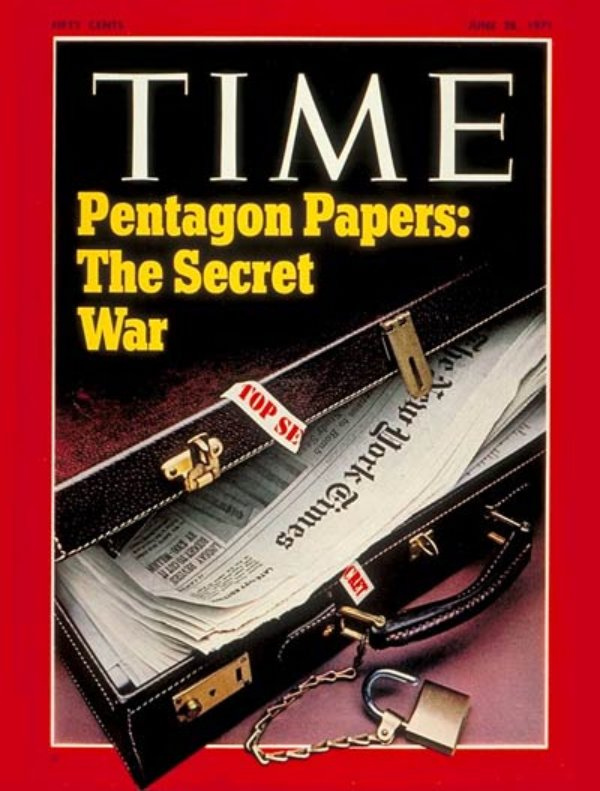
June 28, 1971

THE issues were momentous, the situation unprecedented. The most massive leak of secret documents in U.S. history had suddenly exposed the sensitive inner processes whereby the Johnson Administration had abruptly escalated the nation’s most unpopular—and unsuccessful—war. The Nixon Government, battling stubbornly to withdraw from that war at its own deliberate pace, took the historic step of seeking to suppress articles before publication, and threatened criminal action against the nation’s most eminent newspaper.
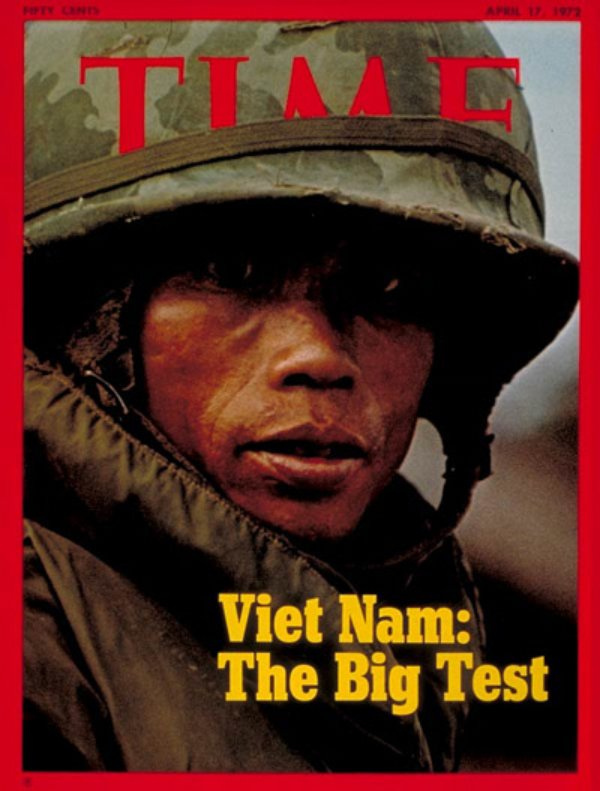
Apr. 17, 1972

Back in 1969, when Vietnamization was put into effect, the Nixon Administration had realized that the policy would eventually be put to a violent test. The time, it reckoned, would come after the U.S. had ceased to have a significant ground combat capability in Viet Nam, and before the November 1972 elections. More recently, U.S. intelligence had forecast that the Communist assault would come some time between February and April or May, when the monsoon rains begin the annual conversion of much of Indochina into a sea of mud.
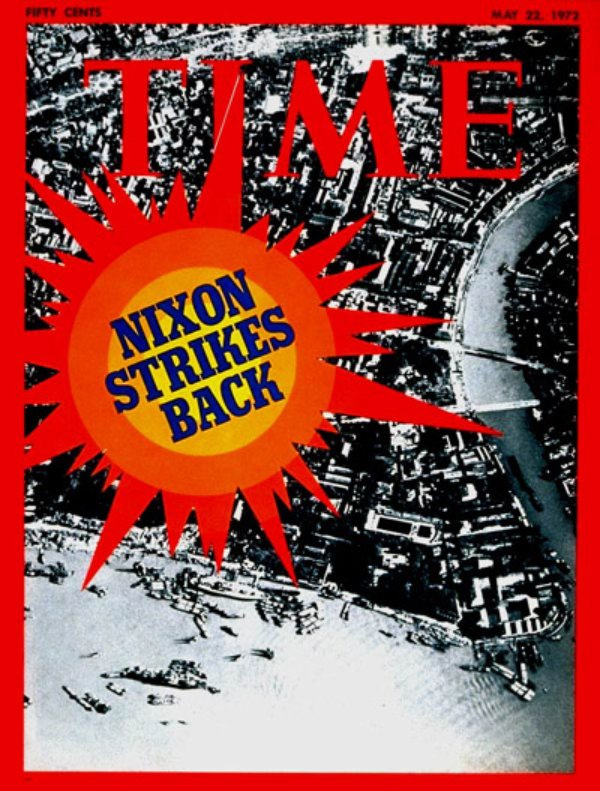
May 22, 1972

The President began considering new military moves soon after Communist troops swept across the DMZ with tanks and heavy artillery on Easter Sunday, and too many South Vietnamese units crumpled with alarming speed. His choices included the resumption of massive bombing of the North, including possible air strikes against Hanoi itself, and the destruction of flood-preventing dikes. He could even send U.S. Marines into a hit-and-run attack above the DMZ to divert Hanoi’s troops. He considered urging the South Vietnamese to stage a similar raid or to counterattack across the zone.

October 30, 1972

ENDING THE WAR. A cease-fire freezing all forces in South Viet Nam “in place” and halting all military activity —including the U.S. bombing of North Viet Nam and the mining of its harbors —would be put into effect initially. Then negotiations would begin on the final withdrawal of all U.S. forces and the return of the American prisoners of war. Possibly the talks would eventually extend to the related wars in Cambodia and Laos.
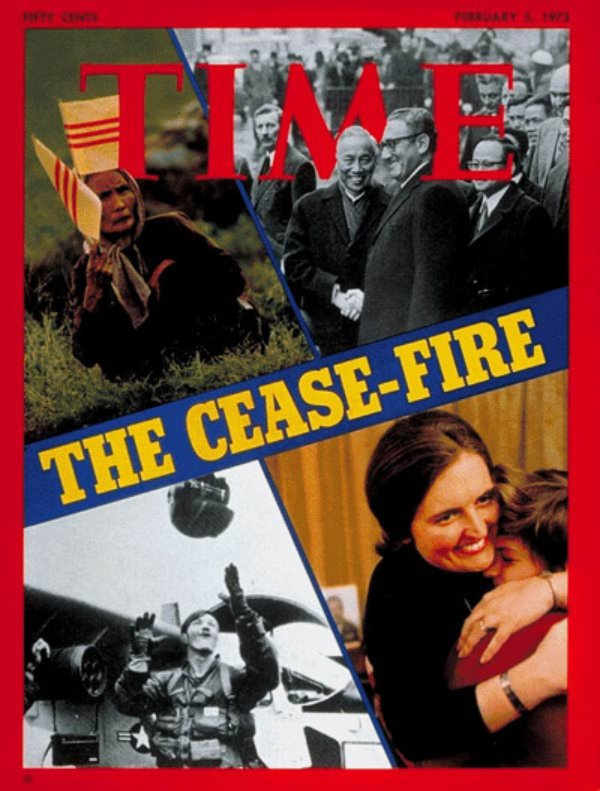
February 5, 1973

The President mentioned achieving “peace with honor,” but it is a dubious and troubling phrase to apply to Viet Nam. No matter what honor the U.S. could still extract from that cruel battleground, honor must now be sought at home as much as abroad. As Kissinger put it in his briefing: “Together with healing the wounds in Indochina, we can begin to heal the wounds in America.”
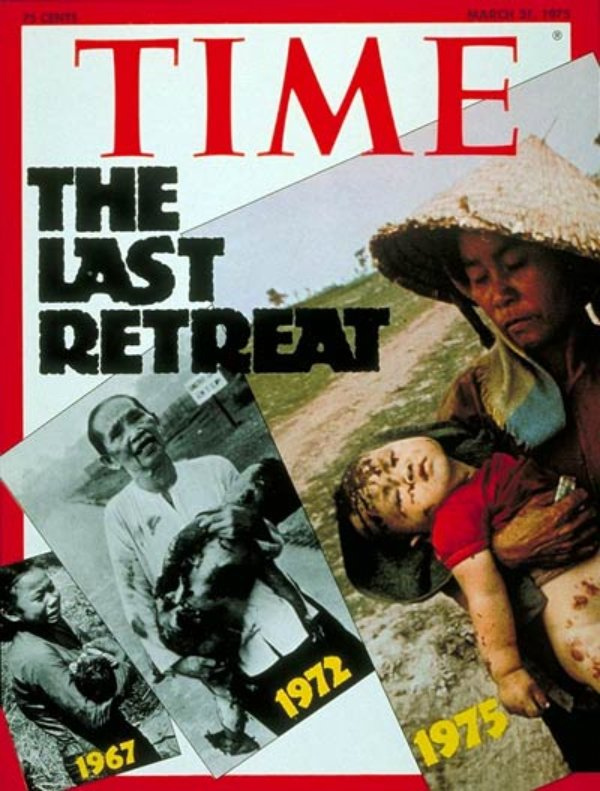
March 31, 1975

Thieu’s decision to give up the provinces was a gritty gamble that he could improve his country’s defensive posture by what he clearly hoped would be a last retreat. Yet to many Americans who fought in Viet Nam, the surrender brought anguished remembrances.

May 12, 1975

In the end, the Viet Cong and North Vietnamese poured into Saigon, raised the flag of the Provisional Revolutionary Government and took into custody South Vietnamese President Duong Van Minh and Premier Vu Van Mao. For many Americans, it was like a death that had long been expected, but was shocking when it finally happened.
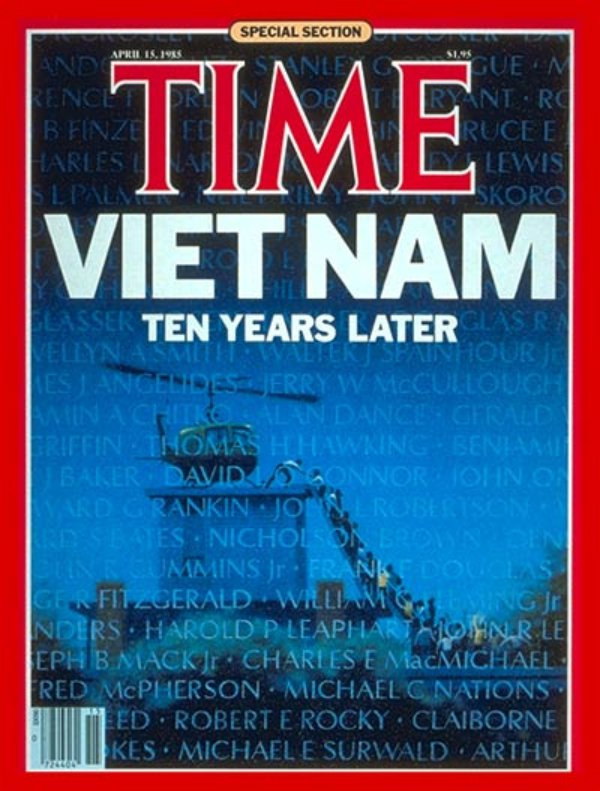
April 15, 1985

And so ten years ago this month, the North Vietnamese swept down the map like the blade of a guillotine. They came in full divisions, with artillery and tanks. They banged across the countryside like Patton. It was no longer the endless, hallucinatory Viet Nam at all, but blitzkrieg, Western war, all of those years of inconclusive struggle finished off briskly in a short, surreal spring.

Aprl 30, 1990

Normal relations between the U.S. and Vietnam could contribute to peace and cooperation in Southeast Asia and to maintaining the independence of this area .
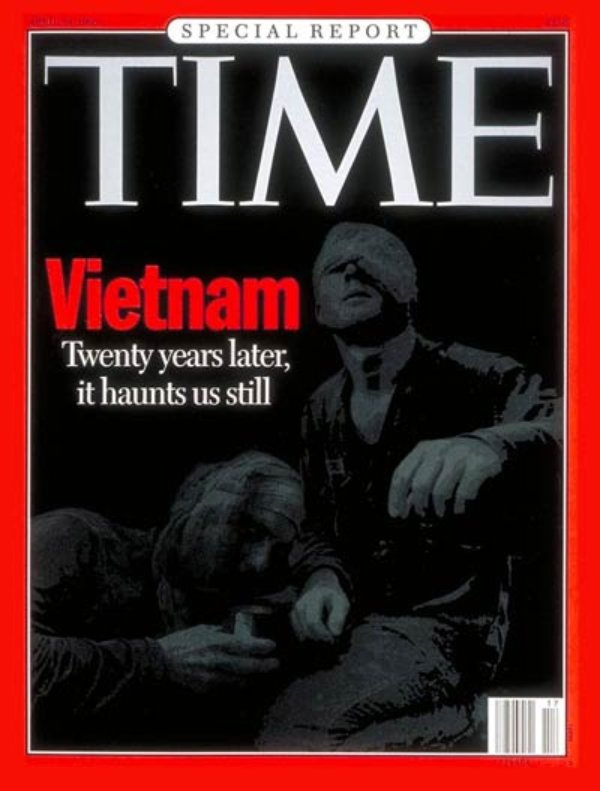
April 24, 1995

Because Vietnam was a hot war in the midst of a cold war, it was afflicted with contradictions. On the one hand, America’s leaders assumed they had to fight; but at the same time, the U.S. had to fight within tight, self-set limits, fearful that using too much force would prompt China to intervene.

3 Comments

Filed under Vietnam War

LIFE Covers: The Vietnam War


Photojournalism

One of the most important stories that LIFE Magazine would ever cover was the Vietnam War. From sending photographers to the trenches to covering the stories of draft dodgers and deserters, LIFE Magazines during the 1960s explored every aspect of the most highly televised conflict in history. LIFE Magazine would do it’s part to shape the story, as well.

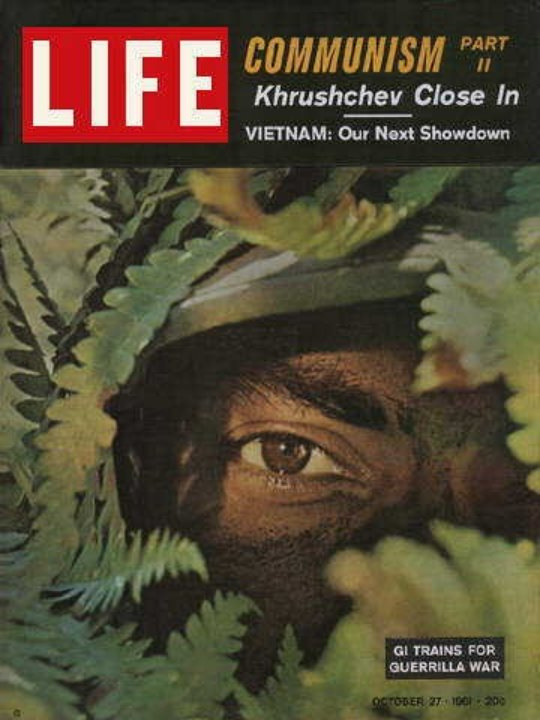
Life Magazine (October 27, 1961) Advisers in Vietnam, mans eye

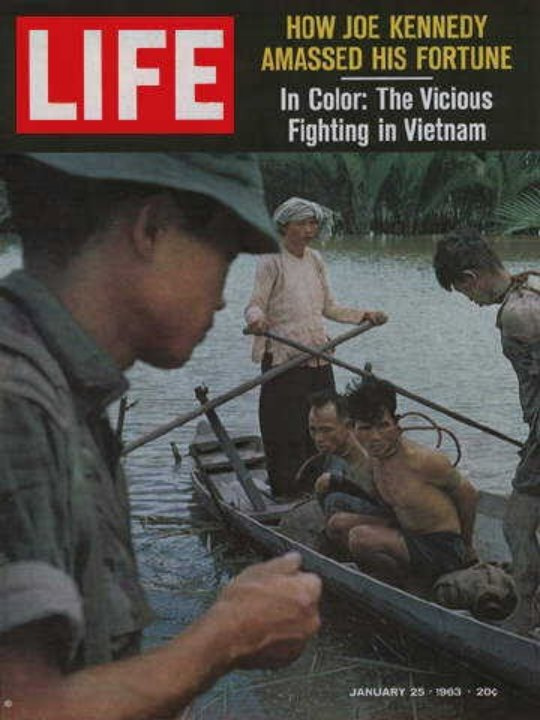
Life Magazine (January 25, 1963) Mekong Delta

Life Magazine (November 15, 1963) South Vietnam soldiers

Life Magazine (March 20, 1964) Henry Cabot Lodge in Vietnam

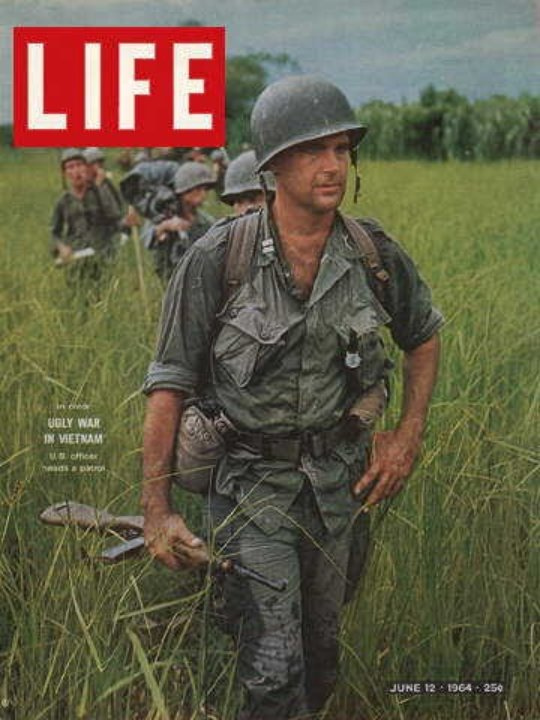
Life Magazine (June 12, 1964) Patrol in Vietnam

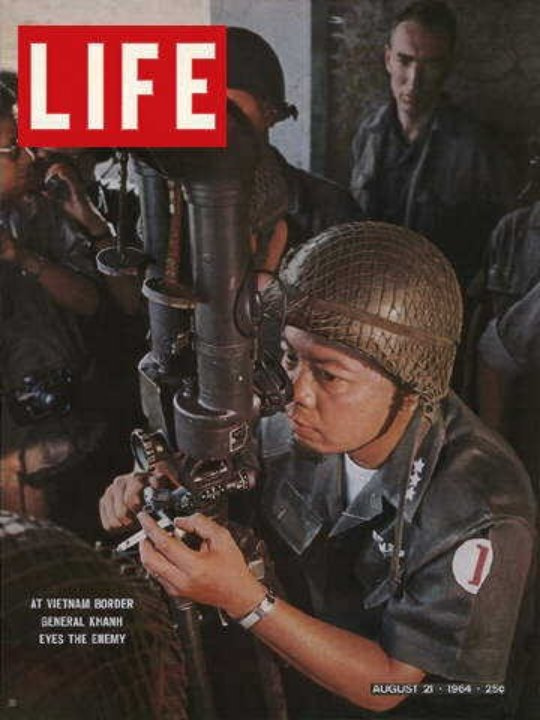
Life Magazine (August 21, 1964) South Vietnam’s General Khanh

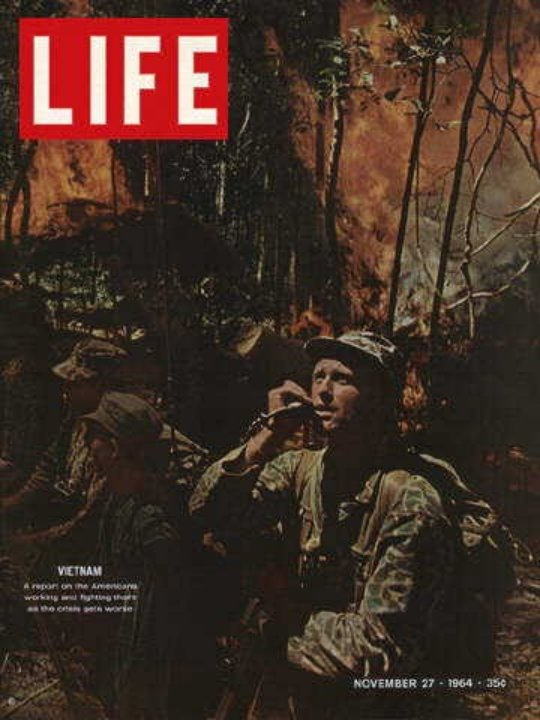
Life Magazine (November 27, 1964) Vietnam GIs

Life Magazine (April 16, 1965) U.S. helicopter crew, Yankee Papa

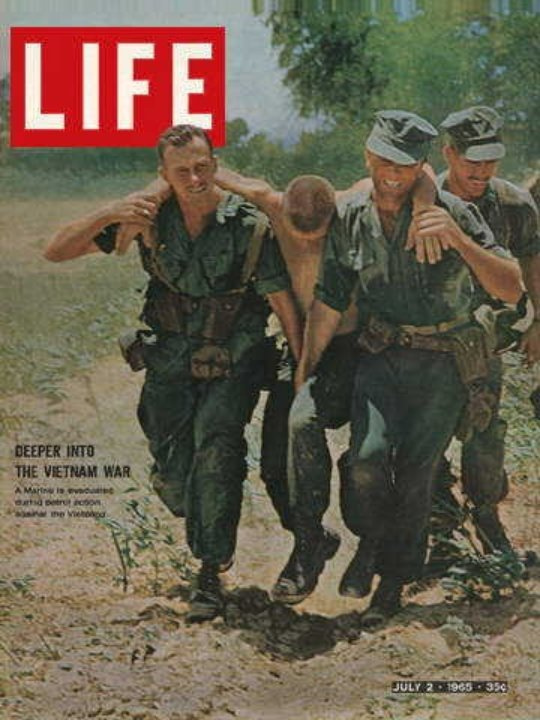
Life Magazine (July 2, 1965) Wounded marine evacuated in Vietnam

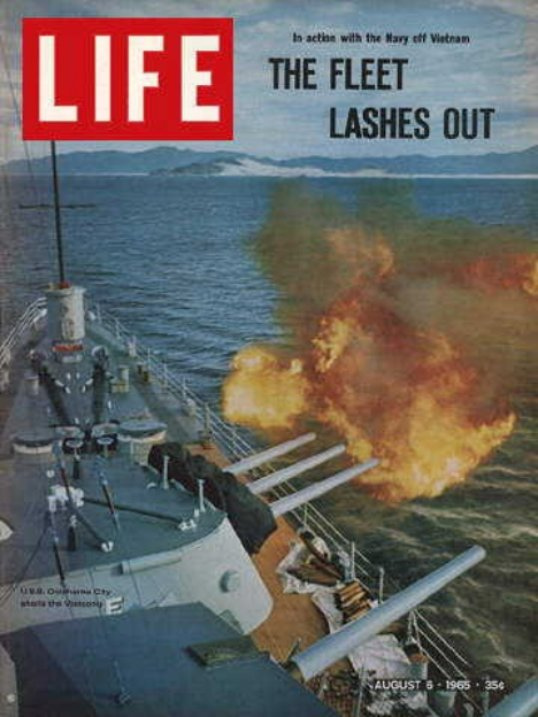
Life Magazine (August 6, 1965) U.S. Navy vs. Vietcong

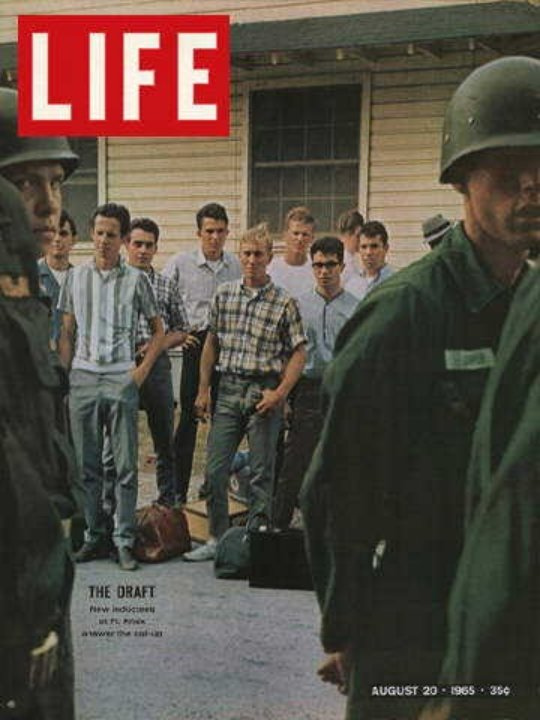
Life Magazine, August 20, 1965 – Draft inductees

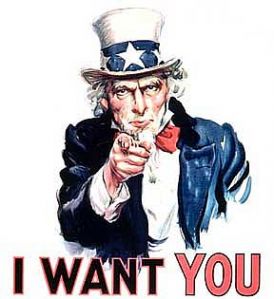
In the summer of 1969 I got my induction papers from Uncle Sam; I think it read: “I Want You”

Life Magazine (November 26, 1965) Vietcong prisoner

A Vietcong prisoner, captured during the battle at Cape Batangan, under guard as he awaits transfer to a U.S. POW compound.

Life Magazine (January 14, 1966) Vietnam’s Ho Chi Minh and Pham Van Dong

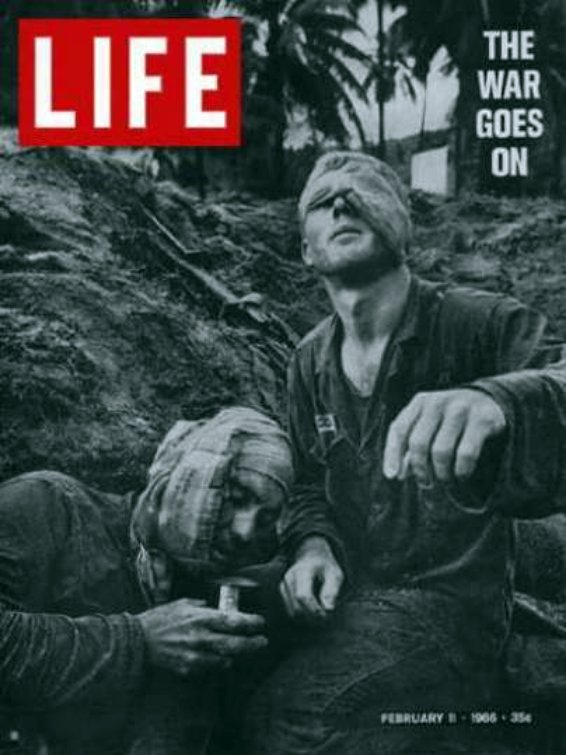
Life Magazine (February 11, 1966) Wounded GIs in Vietnam

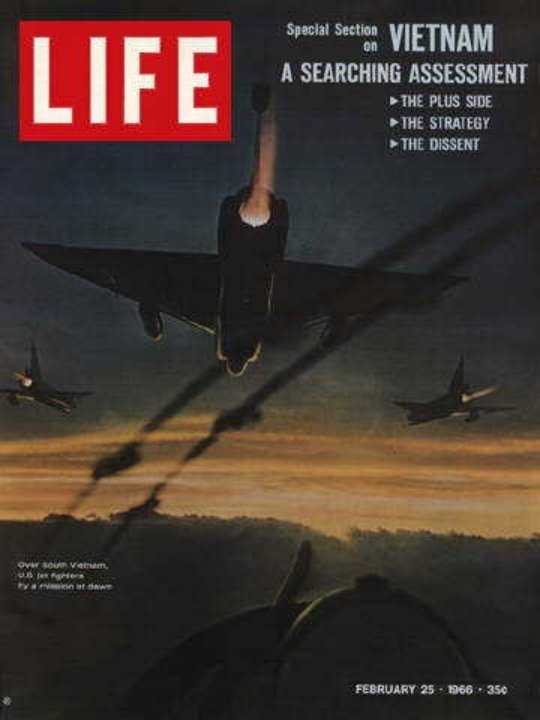
Life Magazine (February 25, 1966) Dawn mission over South Vietnam

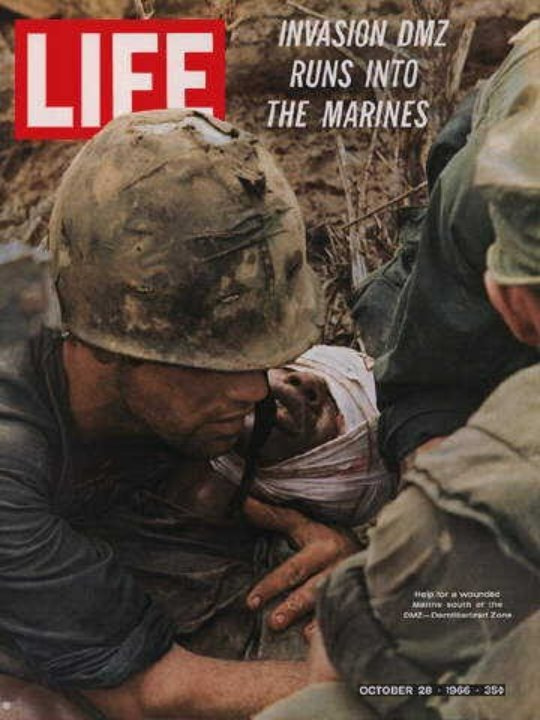
Life Magazine (October 28, 1966) Wounded marine

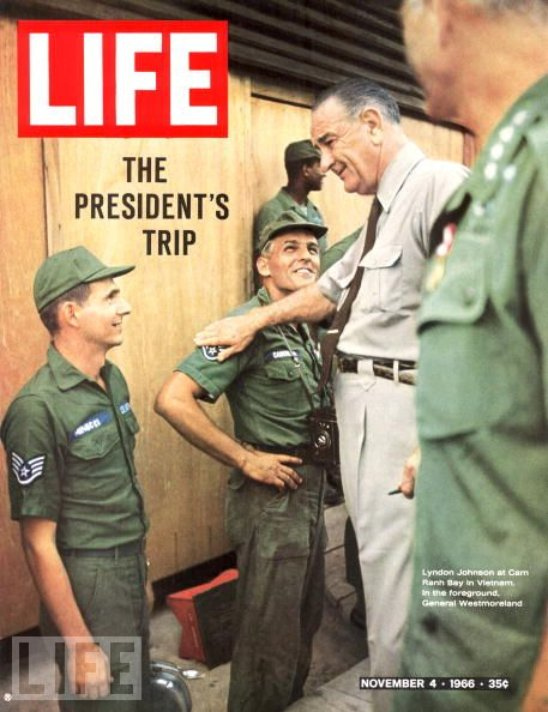
Life Magazine (November 4, 1966) President Johnson goes to Vietnam

About four years after this photo, Vice President Spiro Agnew paid a visit to Vietnam. Our unit provided security around Saigon before his arrival.

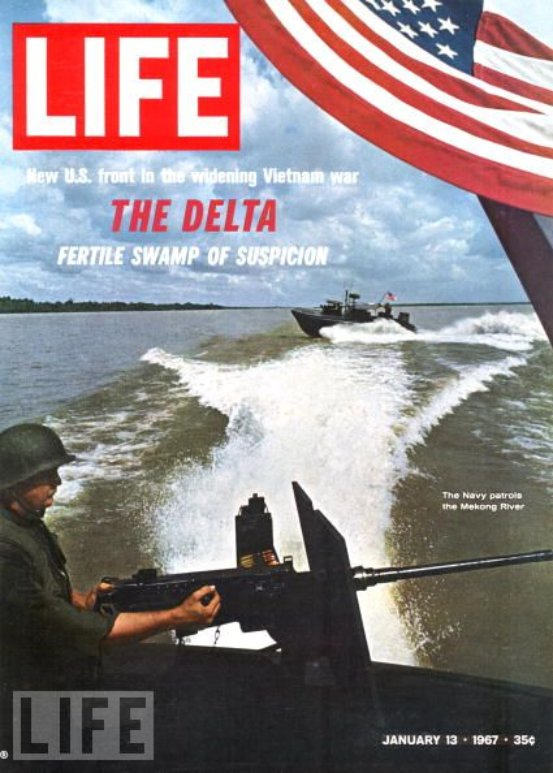
Life Magazine (January 13, 1967) Navy patrol in Mekong River

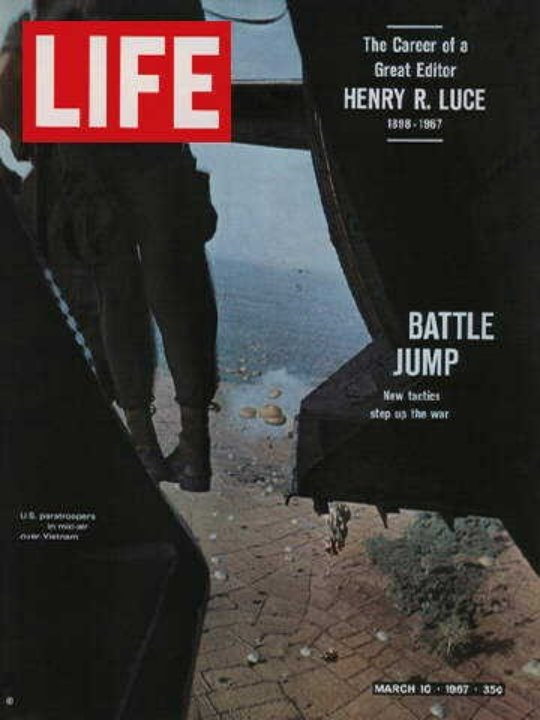
Life Magazine (March 10, 1967) U.S. paratroopers over Vietnam

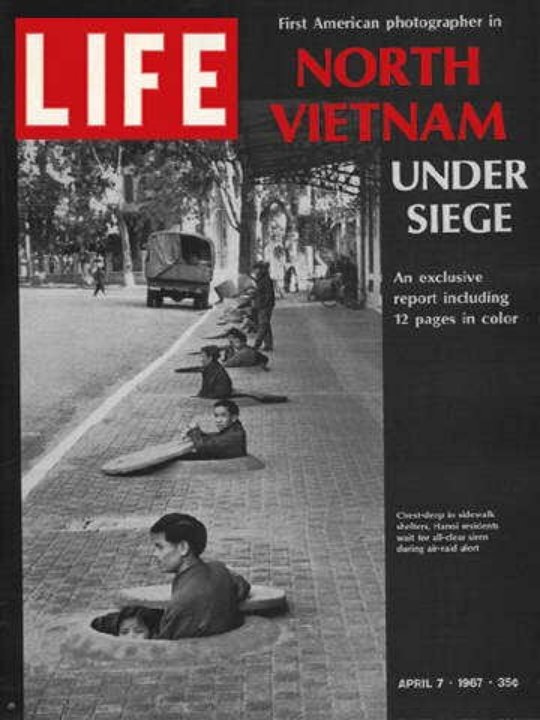
Life Magazine (April 7, 1967) Hanoi air-raid alert

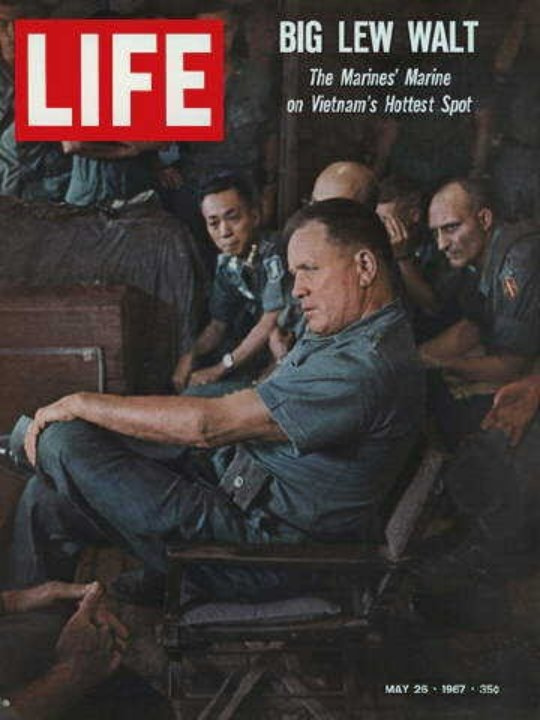
Life Magazine (May 26, 1967) General Lew Walt

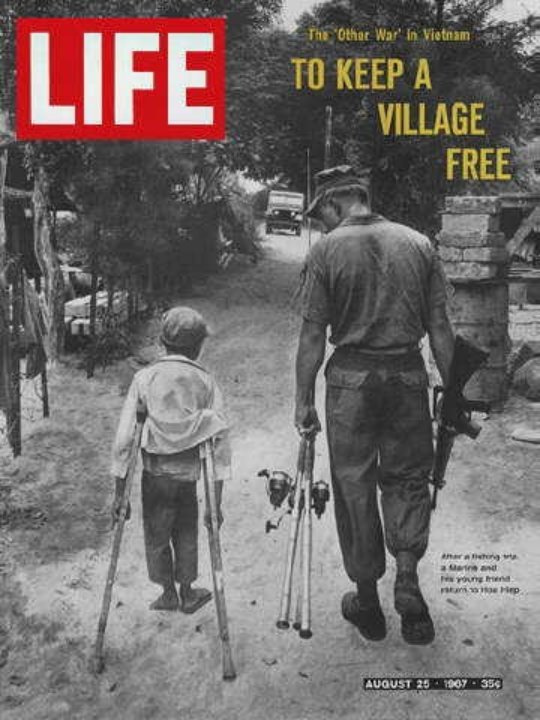
Life Magazine (August 25, 1967) Marine and young Vietnamese friend

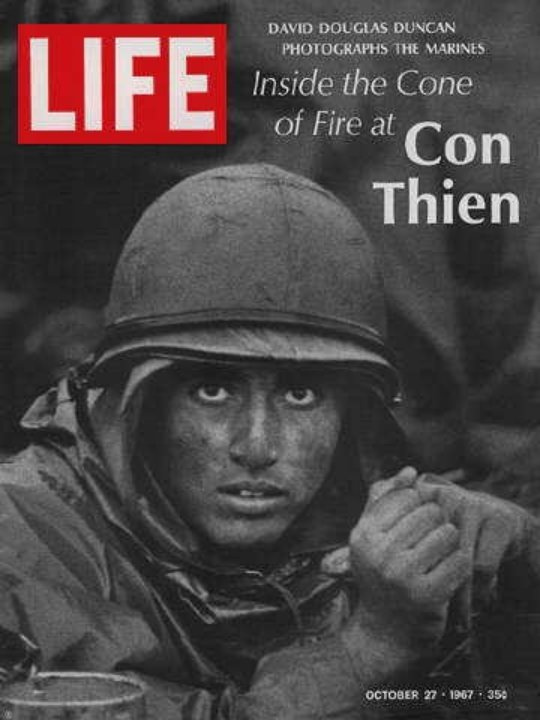
Life Magazine (October 27, 1967) GI at Con Thien

Life Magazine (February 16, 1968) North Vietnamese soldiers

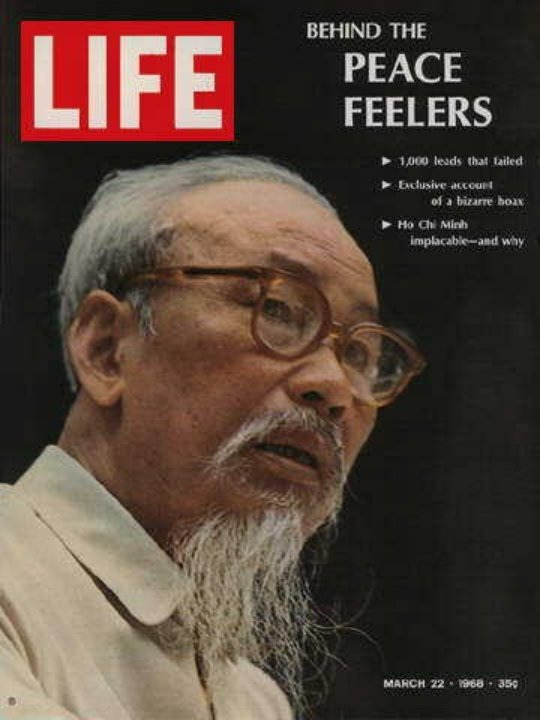
Life Magazine (March 22, 1968) Ho Chi Minh

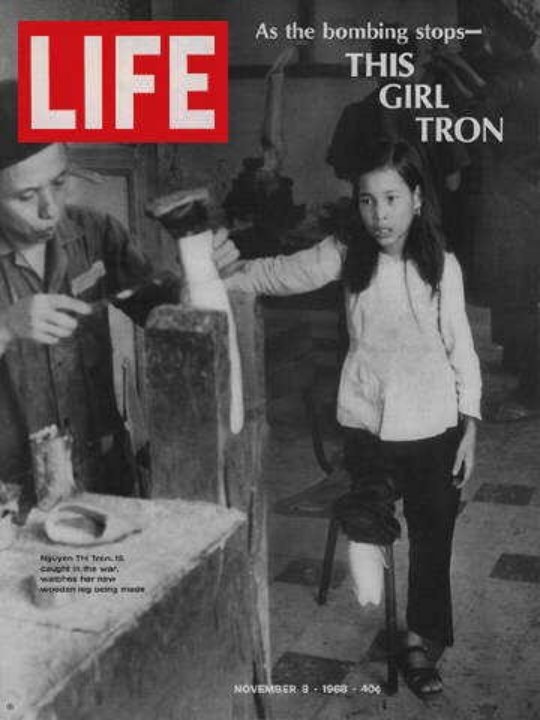
Life Magazine (November 8, 1968) Vietnam war victim, This girl tron

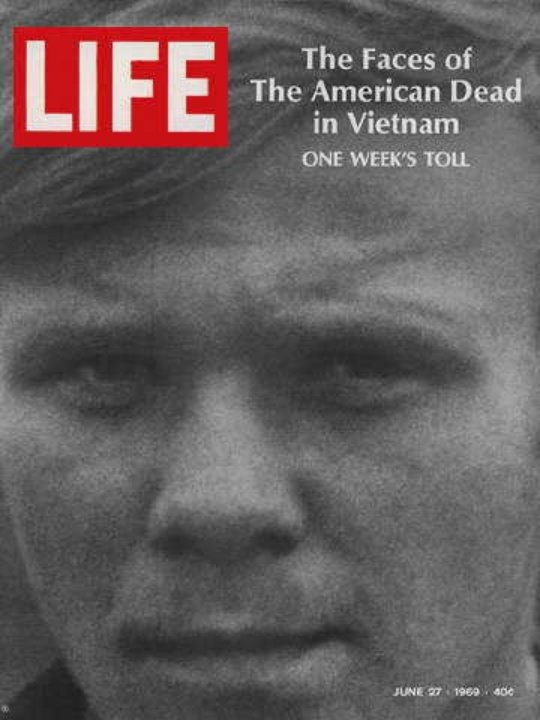
Life Magazine (June 27, 1969) American dead in Vietnam

One of LIFE’s most memorable stories was from an issue published on June 27, 1969. Editor-in-chief Hedley Donovan approved a yearbook-like spread of photos of the 242 soldiers who died in Vietnam between May 28 and June 3. That feature did what the editor hoped – it burned into the American consciousness the young faces of the men who fought.

Life Magazine (September 6, 1969) Woodstock

The Woodstock festival was a protest to pull soldiers from the Vietnam War.

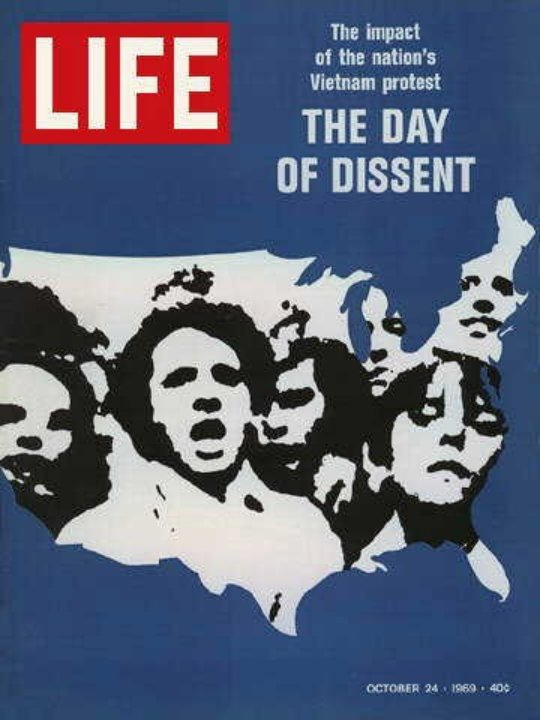
Life Magazine (October 24, 1969) Composite: Dissent

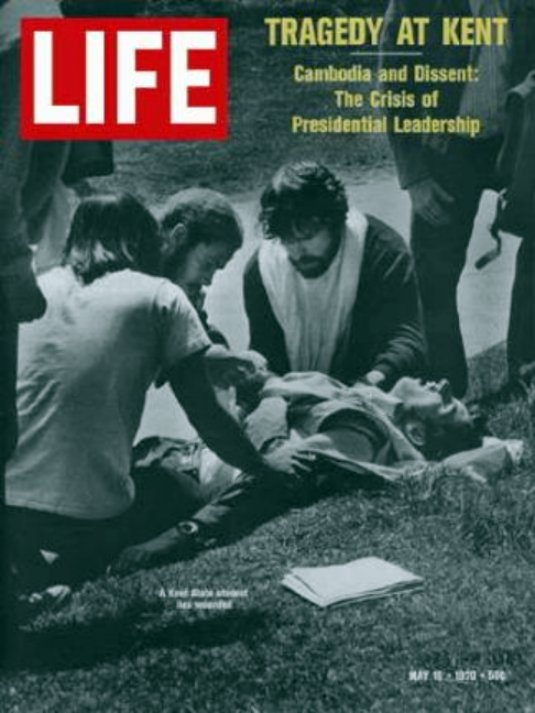
Life Magazine (May 15, 1970) Wounded Kent State student

Some of the students who were shot had been protesting against the American invasion of Cambodia, which President Richard Nixon announced in a television address on April 30.

Life Magazine (May 22, 1970) Composite: Our Forgotten Wounded

Life Magazine (January 29, 1971) Bob Hope

I was very fortunate to be able to attend the Bob Hope USO Christmas Show in 1970. It was by far my fondest memory of my Vietnam tour…

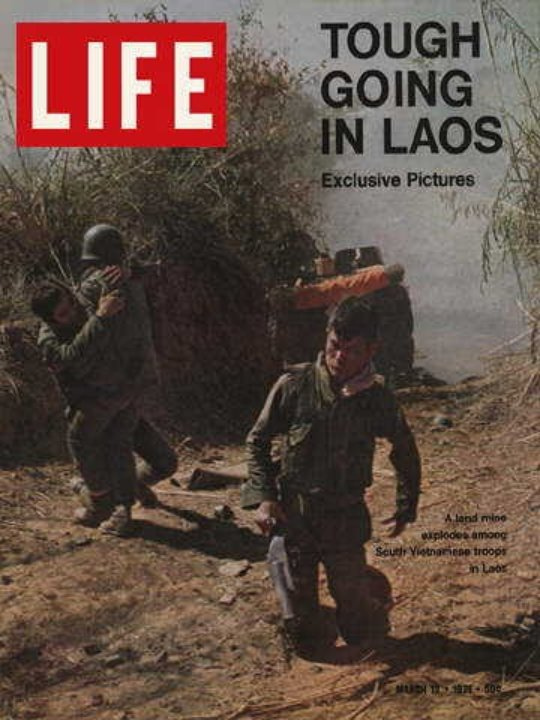
Life Magazine (March 12, 1971) South Vietnamese soldiers in Laos

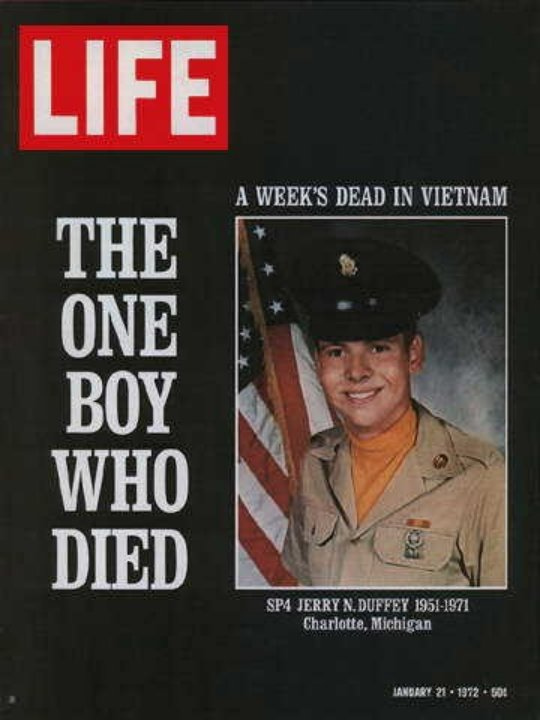
Life Magazine, January 21, 1972 – Single U.S. Vietnam casualty in a week

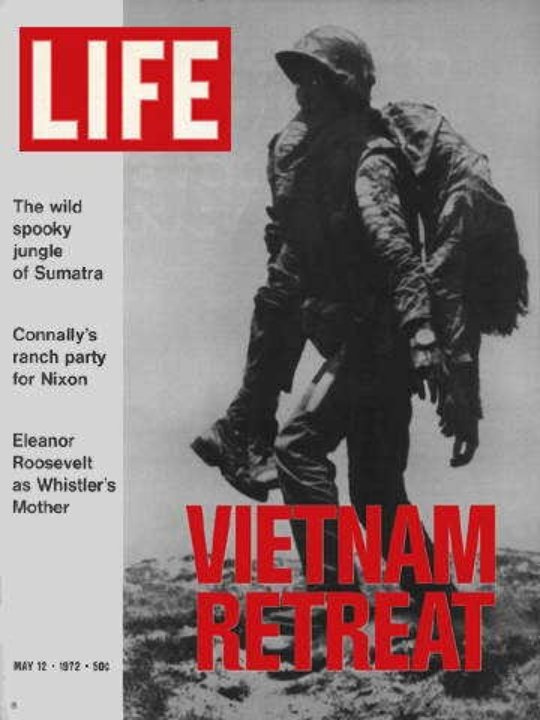
Life Magazine (May 12, 1972) Vietnam soldier carries wounded buddy

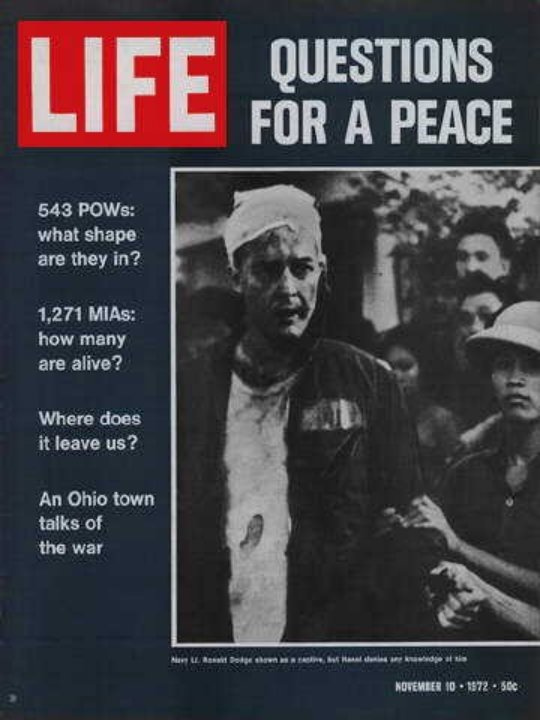
Life Magazine (November 10, 1972) Navy POW

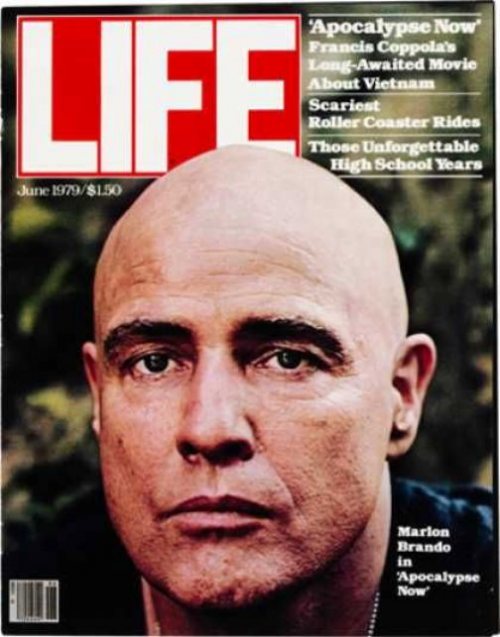
Life Magazine (June 1, 1979) Marlon Brando in Apocalypse Now

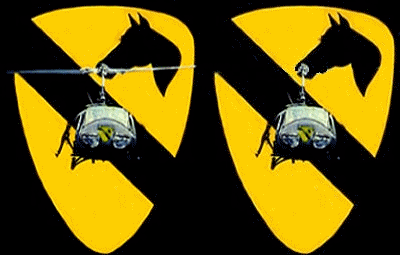
When I saw this issue of LIFE on a magazine rack in 1979, it definitely got my attention. It had an article about a movie to be released August 15th of that year featuring the unit (1st Squadron 9th Cavalry) I served with in Vietnam.

27 Comments

Filed under Vietnam War

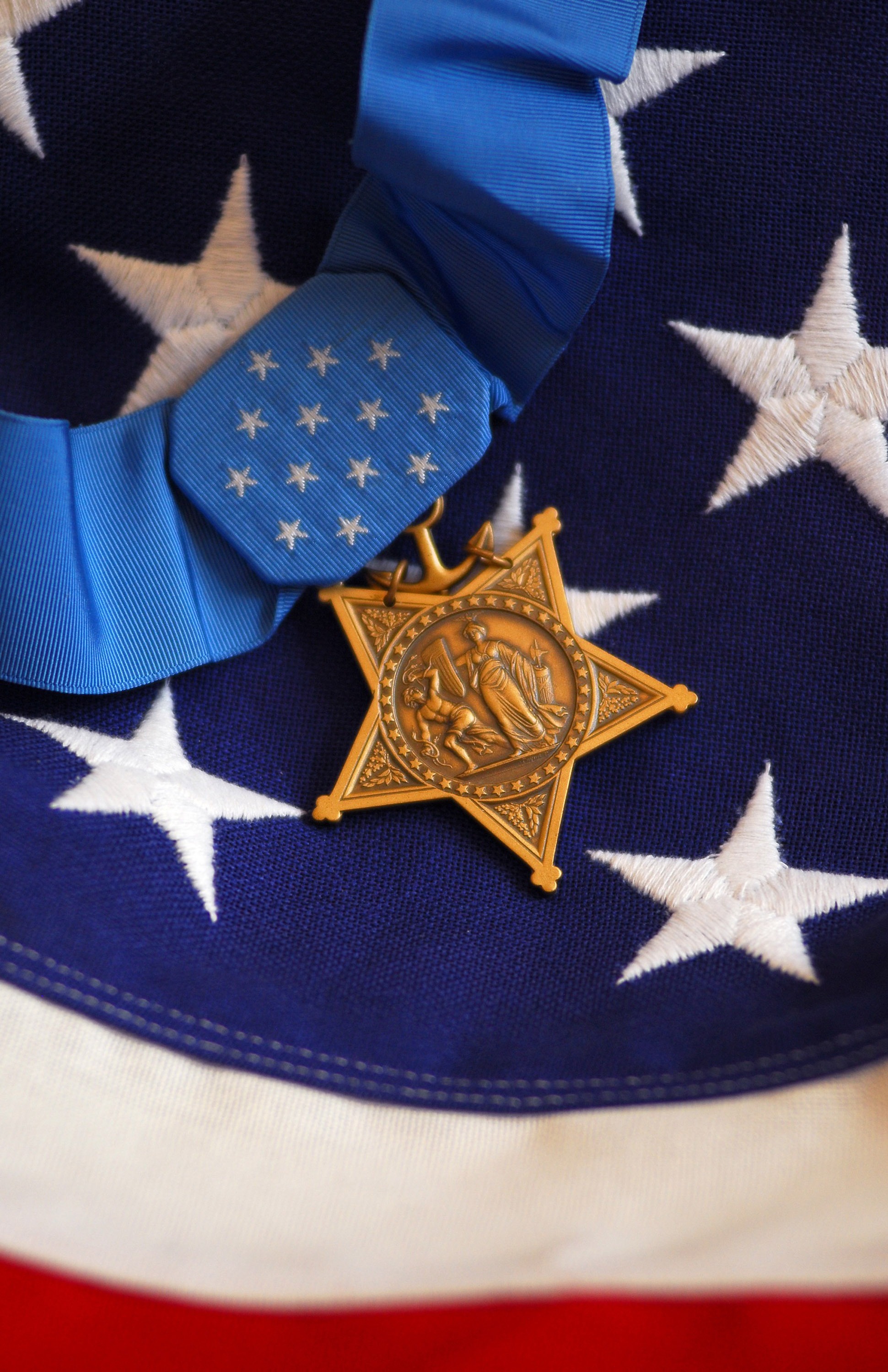
Medal of Honor


Highest military decoration presented by the U.S. government

The 1st Squadron, 9th Cavalry troopers earned three Medals of Honor in Vietnam.

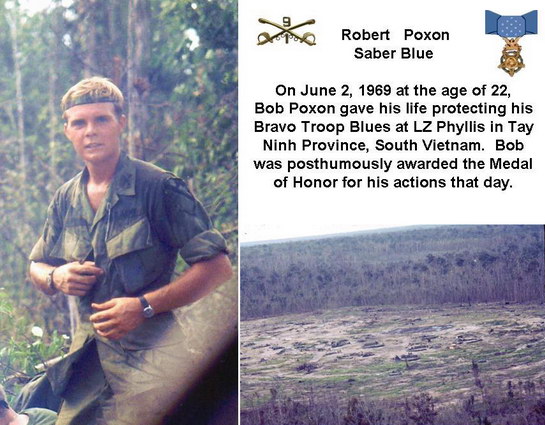
1LT Robert Leslie Poxon

For conspicuous gallantry and intrepidity in action at the risk of his life above and beyond the call of duty. 1LT Poxon, Armor, Troop B, distinguished himself while serving as a platoon leader on a reconnaissance mission. Landing by helicopter in an area suspected of being occupied by the enemy, the platoon came under intense fire from enemy soldiers in concealed positions and fortifications around the landing zone. A soldier fell, hit by the first burst of fire. 1LT Poxon dashed to his aid, drawing the majority of the enemy fire as he crossed 20 meters of open ground. The fallen soldier was beyond help and 1LT Poxon was seriously and painfully wounded. 1LT Poxon, with indomitable courage, refused medical aid and evacuation and turned his attention to seizing the initiative from the enemy. With sure instinct he marked a central enemy bunker as the key to success. Quickly instructing his men to concentrate their fire on the bunker, and in spite of his wound, 1LT Poxon crawled toward the bunker, readied a hand grenade and charged. He was hit again but continued his assault. After succeeding in silencing the enemy guns in the bunker he was struck once again by enemy fire and fell, mortally wounded. 1LT Poxon’s comrades followed their leader, pressed the attack and drove the enemy from their positions. 1LT Poxon’s gallantry, indomitable will, and courage are in keeping with the highest traditions of the military service and reflect great credit upon himself, his unit, and the U.S. Army.
Screen Shot 2015-04-18 at 6.16.25 AM

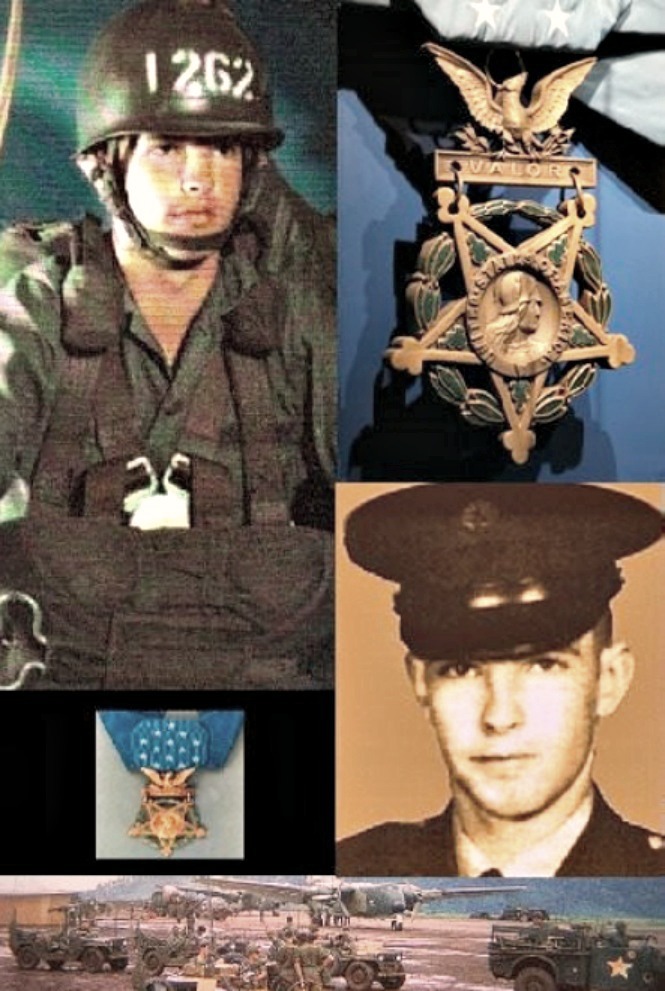
Sgt. Donald Sidney Skidgel

Rank and organization: Sergeant, U.S. Army, Troop D, 1st Squadron, 9th Cavalry, 1st Cavalry Division. Place and date: Near Song Be, Republic of Vietnam, 14 September 1969. Entered service at: Bangor, Maine. Born: 13 October 1948, Caribou, Maine. For conspicuous gallantry and intrepidity in action at the risk of his life above and beyond the call of duty. Sgt. Skidgel distinguished himself while serving as a reconnaissance section leader in Troop D. On a road near Song Be in Binh Long Province, Sgt. Skidgel and his section with other elements of his troop were acting as a convoy security and screening force when contact occurred with an estimated enemy battalion concealed in tall grass and in bunkers bordering the road. Sgt.Skidgel maneuvered off the road and began placing effective machinegun fire on the enemy automatic weapons and rocket-propelled grenade positions. After silencing at least 1 position, he ran with his machinegun across 60 meters of bullet-swept ground to another location from which he continued to rake the enemy positions. Running low on ammunition, he returned to his vehicle over the same terrain. Moments later he was alerted that the command element was receiving intense automatic weapons, rocket-propelled grenade and mortar fire. Although he knew the road was saturated with enemy fire, Sgt. Skidgel calmly mounted his vehicle and with his driver advanced toward the command group in an effort to draw the enemy fire onto himself. Despite the hostile fire concentrated on him, he succeeded in silencing several enemy positions with his machinegun. Moments later Sgt. Skidgel was knocked down onto the rear fender by the explosion of an enemy rocket-propelled grenade. Ignoring his extremely painful wounds, he staggered back to his feet and placed effective fire on several other enemy positions until he was mortally wounded by hostile small arms fire. His selfless actions enabled the command group to withdraw to a better position without casualties and inspired the rest of his fellow soldiers to gain fire superiority and defeat the enemy. Sgt. Skidgel’s gallantry at the cost of his life were in keeping with the highest traditions of the military service and reflect great credit upon himself, his unit, and the U.S. Army.

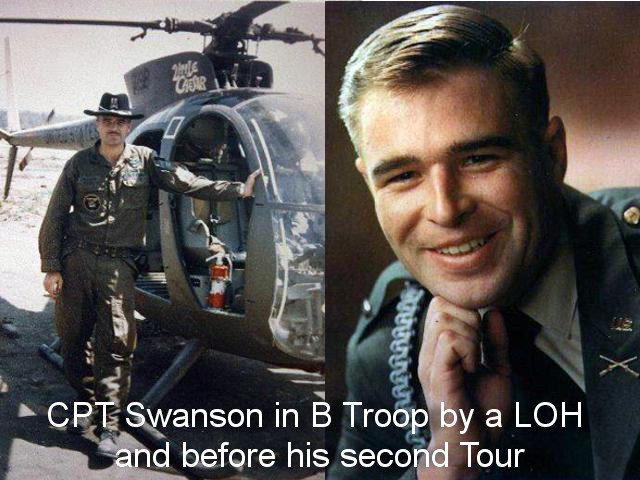
CPT Jon Edward Swanson

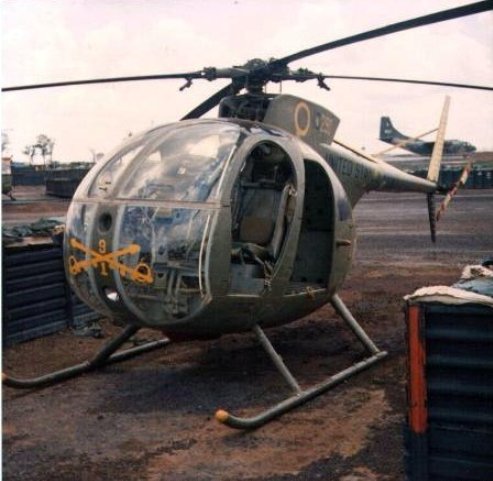
Walker Jones‘ Saber Article May/June 2000: Dear Troopers and Family, We have great news! Our close family just got larger. And we all have recently, by proxy, received a huge dose of pride to boot. I had the distinct honor (and luck) to be present on 1 May at the White House Rose Garden when President BUSH presented the Medal of Honor (posthumously) to the wife and daughters of CPT Jon Edward SWANSON (B Trp, ’70-71). CPT SWANSON and his gunner/observer, SSG Larry G. HARRISON were killed on Feb. 26, 1971 when their OH-6A (“Loach”) was shot down in Cambodia. The 1-9th Cambodia incursion in ’71 supported “Task Force 333” concurrently with the infamous “Lam Son 719” in Laos – I presume we were there to keep the NVA in Cambodia occupied; well, they kept us quite occupied, as any Trooper from those days can attest! These two men’s remains were only recently located and identified. The mission to award Jon with the MOH was apparently quite independent, but coincidental, with the finding and identification of his and HARRISON’s remains, which were indistinguishable and thus were buried together on 3 May. CPT SWANSON was B Trp’s Scout Plt Ldr (Sabre White) while HARRISON was the Scout Plt Sgt (White Mike); the top Scout leadership in the Troop died together. CPT Jon E. SWANSON I was already in D.C. on business that week and had earlier received a heads-up from Al DeFLERON of the Bullwhip Squadron Assn about the MOH plans and Arlington interment. After a mad series of cell phone exchanges, I met up with 3 other former 1-9th pilots (Vietnam) to witness the President’s presentation of the MOH in the Rose Garden on May 1. At the White House gates, I joined Jack SHIELDS (B Trp XO, CO, ’70-71), and James “Jim” KURTZ (A, C Trp Cobra pilot, ’70-71, 5235 Nottinghill Lane, Fairfax, VA 22032 ), then met Jack MORRISSEY (A Trp pilot, ’68 ). Jim KURTZ pulled some strings to get us in at the last minute, but due to the short notice, “the word” couldn’t get out in time to get others “vetted” by White House staff. Mike SLONIKER , Vietnam Helicopter Pilots’ Assn (VHPA) Historian, with lots of Pentagon and Arlington experience, and who is a champion of Vietnam helicopter crews, told me that this lack of notice is typical. Too bad, as I believe many dozens would have made the trip. Amy COLEMAN with the Office of Administrative Assistant to the Secretary of the Army did a wonderful job of herding us around to the multitude of additional events. A photo of the presentation is at . Jon’s wife, Sandee SWANSON, and their beautiful daughters, Holly Christine WALKER and Brigid Eileen Swanson-JONES seemed to be knocked out to find us there among the crowd of dignitaries and families, us sporting our Stetsons. They were hungry to know what type of war their hero husband/dad had fought and sacrificed. I’m sure each of us felt like me – so surprised and so honored just to be there and be so … welcomed. That was not what I was expecting. Jack SHIELDS, Jon’s XO at the time he was killed, had traveled from Arkansas, and found himself the only person present who had been there that day in 1971 and knew Jon when he was killed (both had also served their first tours together with D/3-5 Cav, 9th Inf Div). Jack was inundated with questions. Jack also attended Thursday’s activities with Jon’s family, which included CPT SWANSON’s induction into the Hall of Heros at the Pentagon: see . He also kept telling me that B Trp’s CO, MAJ LOTT – who put Jon in for the MOH – should be sharing in this tremendous event, but he couldn’t be located in time. It was a perfect spring day in the Rose Garden. Dogwoods and azaleas in full bloom (I left s. Texas at 100 degrees). Jon would have been 60 years old on this day. About 60 of Jon SWANSON’s family were present and I think we must have been introduced to all of them – they are all such wonderful people. This family was already “together” before they ever gathered for this event. Great family – now OUR family, or rather we are now THEIR family. There were also lots of heavy duty dignitaries present, including Army Chief of Staff GEN SHINSECKI who is also a Vietnam Vet – rare among General Officers these days – and SGT Major of the Army (SMA) Jack TILLEY (both pictured with Sandee SWANSON at the website above). Nick BACON, president of the Medal of Honor Society, was there along with 3 three other MOH winners. They are fine folks, as one would expect. I should mention that the MOH ceremony was for two men – CPT (Dr.) Ben L. SALOMON was honored for his bravery on Saipan in WW2. Sadly, no living relatives could be located, but several of his college classmates and their families made it their business to attend. SALOMAN’s classmate and champion, Dr. Robert WEST, accepted the MOH from President BUSH. The MOH citation for CPT Jon E. SWANSON states: “On February 26, 1971, Captain Jon E. SWANSON was flying an OH-6A aircraft on a close support reconnaissance mission in support of Army of the Republic of Vietnam (ARVN) Task Force 333 in the Kingdom of Cambodia. Two well equipped enemy regiments were known to be in the area, and Captain SWANSON’s mission was to pinpoint precise enemy positions. To accomplish this mission, he was required to fly at treetop level at a slow airspeed, thus making his aircraft a very vulnerable target. The advancing ARVN unit came under heavy automatic weapons fire from the enemy bunkers in a treeline approximately 100 meters to their front. Captain SWANSON, completely exposing himself to enemy anti-aircraft fire, immediately engaged the enemy bunkers with SSG HARRISON’s concussion grenades and machine gun fire.” “After the crew destroyed five bunkers and successfully evaded ground-to-air fire, Swanson, he discovered a .51 caliber machine gun position. He had expended his heavy ordnance on the bunkers and did not have sufficient explosives to destroy the positions. Consequently, he directed SSG HARRISON mark the position with a smoke grenade and directed a Cobra gunship attack on the position. Upon completion of the attack, he again returned to the area to assess the battle damage. Captain SWANSON found the weapon still intact and an enemy soldier crawling over to man it. He immediately directed HARRISON to engage the individual and killing him. His aircraft was then taken under fire by a second .51 caliber machine gun position.” “Although his aircraft had sustained several hits, Captain SWANSON engaged the position with his aircraft weapons, marked the target, and directed a second Cobra gunship attack. He volunteered to continue the mission despite the fact that he was critically low on ammunition and his aircraft was crippled from the hits it sustained. While approaching the target area, Captain SWANSON was taken under fire by yet another .51 caliber position. In an effort to mark the position with smoke, he again flew into the objective area. Although his aircraft was taking heavy fire, he continued to fly to the .51 caliber position. It was at this point that his aircraft exploded in the air and crashed to the ground. Captain SWANSON’s courageous actions resulted in at least eight enemy killed and the destruction of three enemy anti-aircraft positions, which would have been responsible for the destruction of many more helicopters and crews.” “Many attempts were made to recover the crew. Another helicopter landed near the site, but was forced to take off when it came under heavy enemy fire. Repeated attempts by both ARVN ground troops and U.S. helicopters to reach the downed helicopter were thwarted by enemy fire. On February 27, U.S. helicopters returned to the area and saw what they believed to be two remains near the crash site. As late as March 7, the remains were observed near the crash site, but could not be recovered due to enemy fire.”

On Friday, May 3, Mark “Babysan” HILTON (C Trp Lift pilot, ’70-71) piloted his UT-1 Camry to PZ Falls Church to load up Bill MOELLER (C Trp, avionics, ’70-71, Rockville, MD ), Jesse JAMES (C Trp, HHT engine mechanic, ’69-70, Prince George, VA ) and myself, for transport to LZ Ft. Myer for the memorial service for SWANSON and HARRISON. The chapel service was punctuated by Jon’s daughter Brigid’s courageous statement that ended with a “Welcome Home” to us all. I lost it then. Like I said, we have a great new family addition with whom we should establish and sustain contact. The service was followed by a procession to the interment site led by military band and color guard and the horse-drawn caisson carrying the flag-draped casket. They were fittingly buried together with full military honors. Quite something to witness. There were lots of Cav Hats there, but I cannot possibly know who they all were. Some folks represented Jon’s first tour Unit. 1-9th guys I knew included Bob TREDWAY (C Trp CO ’69-70, 409 N. Street SW, Washington, DC 20024-3701, ) and John POWELL (C Trp Scout and Cobra pilot, ’69-71, Stafford, VA ). Mike “Loadhacker” SLONIKER (VHPA historian and former CAV pilot) led a few of us to pay homage at the gravesite of our hero, Ron TIMBERLAKE). Also there was my bud, former President of the Vietnam Helicopter Crewmembers’ Assn. , Chris WHITE , who drove down from Baltimore. Former VHPA president and SWANSON’s flight school classmate, Tom PAYNE (, was there and has produced a great website tribute to Jon at . And Joe GALLOWAY, co-author of “We Were Soldiers Once … And Young” was also there with his own Cav Hat! I was also very proud to see that the present day 9th Cavalry continues to recognize their legacy. Attending all events last week were the following 1-9th soldiers from Ft. Hood: Btn CO, LTC Roger MCDONALD, CSM Walter SMITH, B Co CO, CPT Jack CRABTREE, and B Co 1SG Everett CLARK. LTC MCDONALD led the incredible welcome we received at the 9th Cav luncheon during last year’s First Cav. Div. Assn. reunion in Killeen/Ft. Hood. CPT SWANSON became the third 1-9th Cav Trooper to be awarded the MOH. The other two are SGT Donald S. SKIDGEL, Trp D, 14 Sept ’69, and 1LT Robert L. POXON, Trp B, 2 June 1969. Each died as a result of their heroism.

8 Comments

Filed under Vietnam War

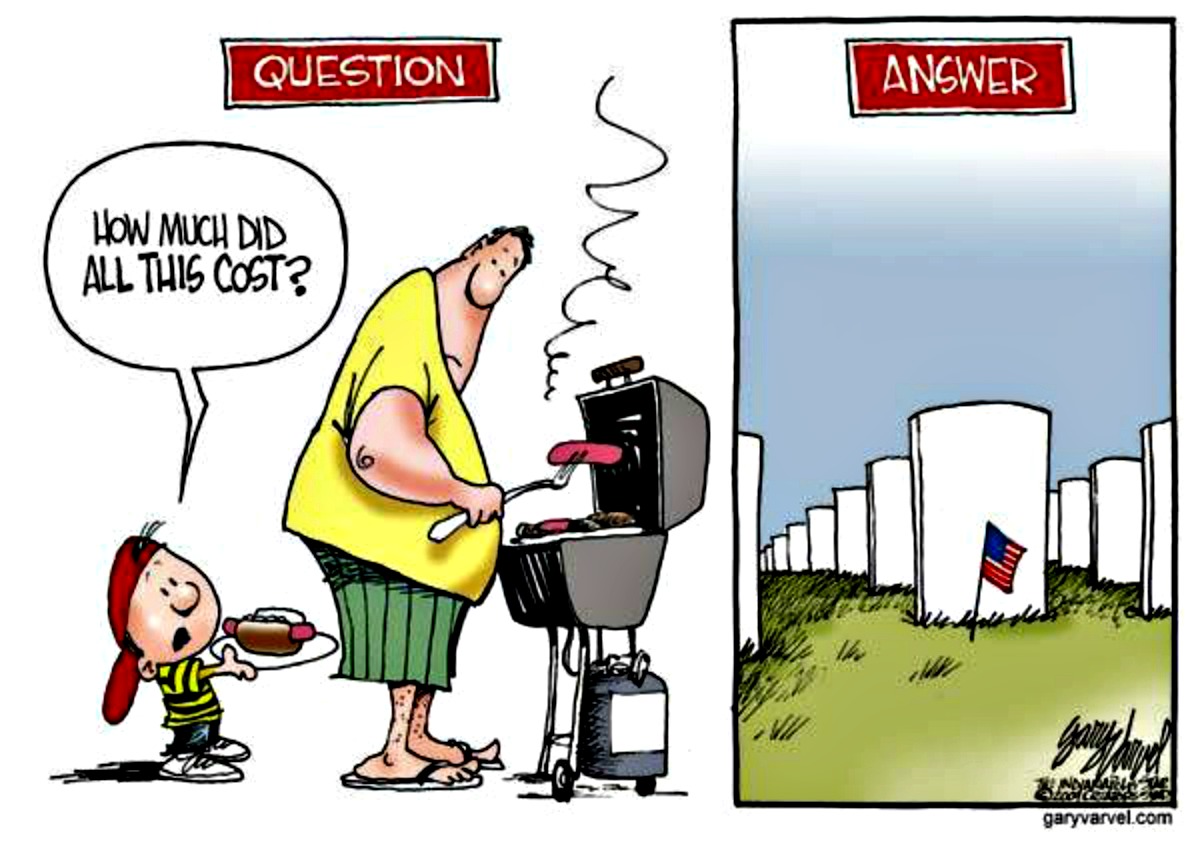
The Cost of Freedom


“Freedom Is Not Free”

securedownload

Vietnam Wall
First click on a state. When it opens, scroll down to the city where you went to high school and look at the names. Click on the name and it will give details of the person’s death, a picture or at least their bio and medals.

http://www.virtualwall.org/iStates.htm

2 Comments

Filed under Vietnam War

Project 100,000


Initiated by Defense Secretary Robert McNamara

I first became aware of the Department of Defense ‘Project 100,000’ when it was posted on the Charlie Troop 1/9th Message Board the other day.

I often wondered how some men I was in boot camp with got into the Army with either their physical or mental shortfalls; now I know. I just hope they fared well in Vietnam and later in life.

Project 100,000 was initiated in October 1966 during American involvement in the Vietnam War and ended in December 1971. It was Considered part of the Johnson’s Great Society by giving training and opportunity to the uneducated and poor.

The men recruited or drafted under this program did not receive the same training as other recruits and draftees after Basic Training was completed. Mr. McNamara and his “Whiz Kids” insisted that these men had to be put into virtually all fields, and this was a disaster.

12 Comments

Filed under Vietnam War

John Hlavacek


Globe-Trotting Foreign Correspondent

Baby boomers that lived in the Midwest in the 70’s may remember John Hlavacek. He was a reporter/foreign correspondent for KMTV-TV in Omaha, Nebraska and traveled around the world covering many history changing events.

I got a surprise phone call from him this morning, and we had a very interesting conversation. Lisa Pelto, a friend of his left a comment on my blog and that’s how we were able to connect. Thanks Lisa! I’ve been trying to locate him for quite some time.

The last time I spoke with John was over 40-years ago in Phuoc Vinh, Vietnam. He was on assignment filming a story for a Christmas Special to be viewed on KCAU-TV. I was one of a handfull of soldiers from that TV viewing area that he interviewed for the program. He said he would try to locate the complete audio/video for that show which he has stored in archives at Texas Tech.

What a remarkable man! At 93 years young he is going strong and he’s working on another book soon to be released.

John was inducted into Journalist’s Excellence Hall of Fame on April 24, 2010…

5 Comments

Filed under Vietnam War

Dancing the Foxtrot


by Walker A. Jones 1970-71

There I was, an experienced Scout pilot by the summer of ‘70. I’d arrived in late April, drafted, naïve and immature. Other boys with peach fuzz, teenagers-on-typewriters, had sent me to the 1st Squadron, 9th Cavalry Regiment in Phouc Vinh. Charlie Troop. I wrote the folks of the luck I had, not having to fly the Hueys we’d watched shot down on TV, but rather a small observation chopper that “only needed one door gunner”. I was to just observe the war. I have the letter. What luck thereafter, to have survived all that war-watching. I was still an FNG back in early May, riding left seat with Frazier as we raced from Cambodia to discover Whiddon’s burning little one door gunner helicopter, adding to the continuing fiasco. After days like those, the hot Vietnam evenings were spent in the O-Club, or in a dim hootch-corner, relieving the stress with your own click of guys, witnessing the stories of the day and those before my time, mostly boasts. We were survivors, hiding the fear with bravado. Strung together, those nights could become a diary of the daily trudge of our uncommon young experiences then.

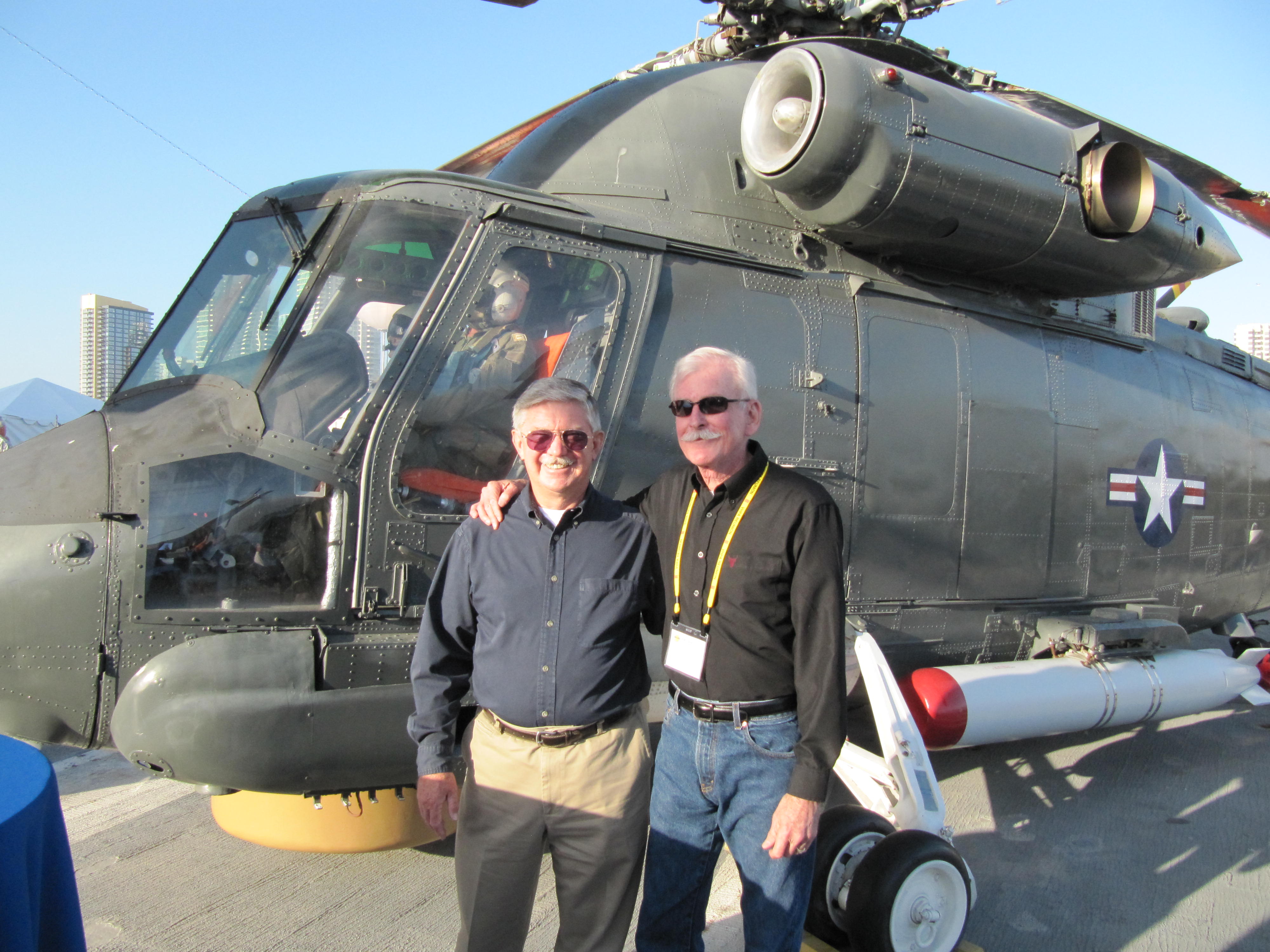
Out of the blue on a mid-summer day, the Navy sailed into Papa Vic on an S2 Seasprite. Affixed starboard was the anti-submarine Magnetic Anomaly Detector. They would fly lowish over a designated map grid, deploying their torpedo-like thingy on a cable to get a “reading”: an arms cache so highly desired by all. But us take-it-to-the-enemy alpha-warriors didn’t like this high-tech crap. Convoy cover was the worst, but this just seemed like another fruitless concoction, like people-sniffers and silent ghost planes aleady had this mission hanged by the cojones. It was a new “Golf Foxtrot”, the C Troop phonetic for wasted missions, the war-wide “Romeo Foxtrot”. We had elevated the rat to a goat, retaining the war-soldiers’ beloved Foxtrot.

Unwashed in aircraft technology, we were secretly intimidated by the Navy’s deep blue, shiny high-class ship, what with it’s electric trim tabs and refined fuel needs. And us unrefined Cav Guys of course derided the Navy’s presumed cush mission; air conditioning and steaks and what have you. No nightly rockets and mortars like us. I was the last Scout to have a turn on this unlikely interservice ride. My day began cruising in lazy circles with the high bird Cobra, bored from the get-go, listening to rock and roll on the ADF, not looking forward to a wasted day of no results. And no revenge. We were way east of our usual AO, low hills with heavy cover. The Air Force had clearly ignored this place. Sure enough, their MAD gear soon had a “reading” and they threw out a smoke. Notified, I tossed out my cigarette and started my drop-like-a-brick twirl to the deck below. Scudding over unexpectantly to the smoke plume, I was just starting to look down when I heard the shot. Didn’t feel anything though, which was good. I’d been hit by one shot before of course; going low and slow tempts them. But you get to know when a bullet hits your bird; usually there are more than one. My gunner-crew chief was new, though it was really his bird. But I was supposed to be the teacher that day, so that he didn’t hear the shot, or didn’t feel the hit, didn’t bother me.

But I must’ve had an odd feeling, as for some reason I decided to pull pitch and get some altitude, though I don’t remember why. I didn’t realize it then, but an experienced pilot can sense something wrong, without needing flashing lights and earbuzzing warnings. Or a dashboard blasted to hell. Very soon, the aircraft started to vibrate, and it got worse in a hurry. A white, acrid smoke quickly had me IFR in the cockpit, though a little left pedal swooshed it away in the doorless Loach. I radioed my High Bird desperately asking to confirm that I was on fire. I didn’t know if I should gain or lose altitude. My hootch mate, Wyatt, sitting front seat Cobra above us, answered in his Kentucky drawl that he ‘don’t see no smoke’. In my own Mississippi drawl I cussed out loud, as if anyone could hear in what was now a schrieking, metallical grinding racket of terror, vibrating the bonemarrow. I asked for a vector and steered west toward an unseen opening. Scouts weren’t given maps, as they tended to provide them to the enemy when they crashed.

Suddenly, with a loud “pop” and a violent jerk, the helicopter went from maelstrom to dead silent calm. What the Foxtrot, over? Then the console started flashing and sirens buzzed in my helmet. Something still was not well with my war-watching helicopter. I had never experienced this before, as usually we just were simply shot down, or quickly plopped into a nearby clearing, with no time for conscious decisions. But I was now a Cav Scout with altitude. Then I noticed the dreaded “splitting needles”. Holy crap. I vividly remember looking down at my left hand holding the collective, and the voice that told me: “push it down”. It was the voice of my flight instructor (thank you). I remember subconsciously trying to pick out a “soft looking spot” in the mosaic of green now rushing up too fast. I didn’t think to call “going down”, as I guess it was obvious; surely they saw my trailing smoke by now. Anyhow, I’d switched off my battery.

I was lucky. The little bird flared itself over the jungletop, pulled pitch at the tips of the trees like taught, and then we fell, straight down, flopping through greenery, tensing up for the impact that never seemed to come, like falling through a hole in the earth.

I never remembered hitting, but when I came to, I was staring at bamboo in my lap and liquid dripping off my face. JP4! And worst of all, the sounds of grenades that had been strung by the Gunner on a wire behind me, jerked loose by the violent impact, their crackly spuming telling me of the impending immolation in the spilled fuel and homemade bombs. “Get the Foxtrot out!” I remember screaming in panic. I lept out the door but was foolishly restrained by my harness. Unhooking, I dived again only to splat myself headfirst into a foot-deep streambed under the jungle canopy that enclosed us. Creekwater, again on my face, and hissing smoke grenades behind me, forming rainbows of colors in the slanting slits of sunlight piercing the crashdust.

We’d plummeted 150 feet, bobbling down a bamboo funnel through a deep jungle ravine, the OH-6A incredibly landing “on its feet” smack in the middle of a hidden streambed. The jungle “just swallered ya’ll up” Wyatt later said. We’d somehow missed the big trees that cause the usual Loach conflagration. As the Hughes Tool Company had promised, the rotors folded up, the tail boom broke away, the skids splayed out on final impact, and my seat had collapsed as advertised. Still don’t know how the hell we’d fallen all that way without flipping over. Maybe we had. And thank you Mr. Hughes and Co. for the overrunning clutch that allowed us to become a free-spinning metal parachute after the transmission seized. At least as far as the treetops.

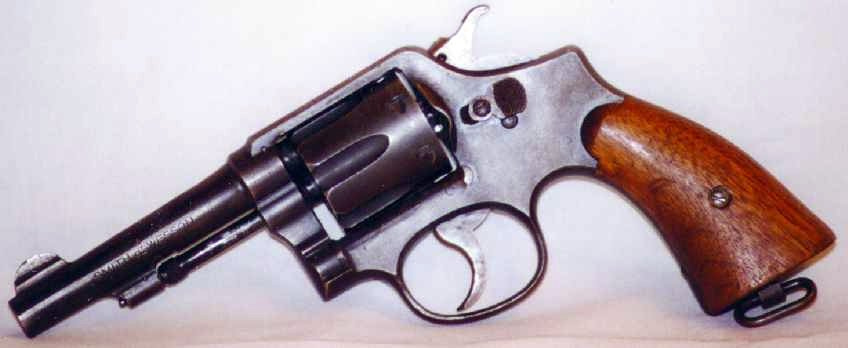
Out of the bird now and glancing around, scared, I saw that we were in some sort of dark tunnel coursing through the dense jungle, formed by the creek, the steep sides thickly lined with huge bamboo stalks and covered over at the top by the arms of giant trees. I had my Gunner take his M-60 and slosh up to the nearest bend, and the Observer to go the other way. I figured the gooks would have to use the creek as a highway if they were to get to us — a fear that I’d previously decided would never happen. I tried my 2-way emergency hand-held to no avail as the sweet noise of unseen helicopters were swarming somewhere above us, shooting rockets and stuff that killed any attempt to send or receive. The old joke that Scouts marked their position by their burning Loach didn’t hold water here, and I was glad. I weakly shot some pen flares that my shaking fingers had extracted from my survival vest, but they couldn’t penetrate the foliage above. But I had my .38 cal., which I swung menacingly at the shadows. Yee ha. I then proceeded to shoot up the place with a half clip of 35mm.

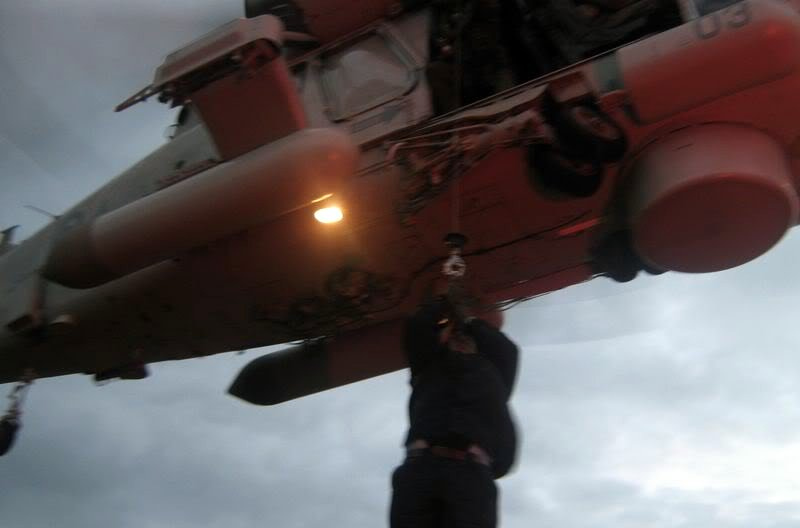
Finally realizing we’d crashed a good ways from One-Shot-Charlie and his comrades, and that the Blues could never get to us this deep, I called my guys back and told them to start trying to make it up the steep ravine through the dense dark bamboo so we could show that we were alive and be rescued. Just as we started to pick our way up, a surreal voice from heaven came down to us: “Stop! Stay where you are! We will get you out!” Totally freaked, I looked up to see a helicopter’s bottom, rotor wash parting the vegetation high above us. It was the Foxtrot Seasprite! It must have a damned electronic megaphone. Sumbitch! Holy Moly! It took me some time to grasp what was happening.

Well, they let down their rescue hoist cable, and one by one we were reeled up like wet puppies to the high-tech mothership, each of us soaked with creekwater, sweat and piss.

In the Charlie Troop club that night I was subjected to the expected barbs of fellow competitors — I mean Scout pilots. “Was it a ‘prang’ or a ‘ditch’?” demanded Chuck Frazier, self-appointed judge and jury. I was feeling terribly guilty, and they meant to preserve it. I still didn’t know why we’d gone down. But that was the way we learned to forget. That we escaped unscathed meant torment. A death or serious wound would have provided deference for the rest of the tour. So I was lucky to be taking the crap. The tail rotor chain bracelet was my most cherished award, wherever it is now.

I couldn’t friggin move my sore body for a couple of days. But someone kept coming by my hootch to plead with me to write the Navy pilots up for hero medals. I blew a fuse. Told them to Foxtrot off. We went out every day knowing that our thankless mission might get us killed. At night, we sat in the club, never breaching the juju talk of people we’d lost. Why should the Golf Foxtrot Navy guys get medals? We don’t need no medals! We did this every damned day. Screw them and the hoddy-toddy helicopter they sailed in on.

Well, those fun times are long ago; we all went on to different lives, burying those days that now seem like a dream. But the club nights could never erase the memories of Whiddon, McKiddy and Skaggs in my first May, much less all the ones that followed. VHPA records told me the names of my crewmembers that summer day. But Wilkes is dead and I can’t find Mitchell. I have tried my best to locate some history about that Army-Navy game that put us in a water-plunge in the center of red-dusty III Corps. I guess Operation Barnacle had some success. I hope that someone else can find those Navy folks; they should get their medals. I’ll pin them on myself. Besides, I find that being back again in the presence of the guys and family from those days brings an unexpected, unspoken comfort. That may be the real legacy we all took home from that dance.

Walker A. Jones
Montferrier-sur-Lez, France

13 Comments

Filed under Vietnam War

Going Home


Back to the ‘World’

Although 26 March 1971 officially marked the end of duties in Vietnam for the 1st Cavalry Division, President Nixon’s program of “Vietnamization” required the continued presence of a strong U.S. fighting force.

My DEROS (Date of Expected Return from Overseas) was near so the first part of April, I transferred to Firebase Di An about 12 miles north of Saigon where I waited for my official orders to depart from Vietnam.

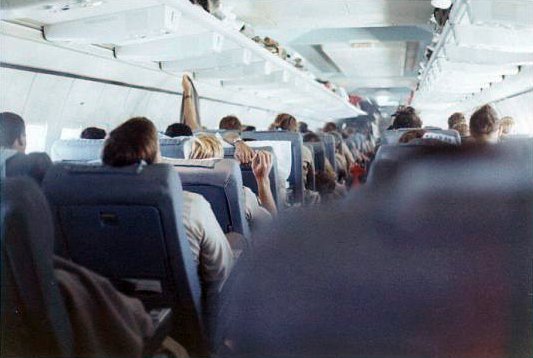
My final days in Vietnam were either uneventful or perhaps my mind shut down wanting to forget it all. I do not recall boarding the ‘Freedom Bird’ or where we flew out of, but I did take these pictures.

‘Freedom Bird’ leaving Vietnam taking us back to Oakland Army Base where the journey began.

I remember arriving at Oakland Army Base around midnight to process out of the Army. I thought back thirteen months earlier when I was processing for my entry to Vietnam. The men coming back looked burned out and lacked emotion. That night I understood why because that’s how I felt.

Although I physically left Vietnam, the experience of combat had a profound and life long effect on my frame of mind.

After receiving my last payment from ‘Uncle Sam’ (about seven-hundred bucks) I signed a bunch of papers, releasing me from active duty in the United States Army.

In the wee hours of the morning, a bus took us to a nearby airport where I caught a flight to Los Angeles International Airport. There I boarded a non stop flight to Eppley Airfield in Omaha, where I would be greeted by my family. I recall the strange looks I got from people as I walked through the airport terminal at LAX carrying my war trophy.

My eyes closed as soon as I boarded my last flight and didn’t open until our approach into Eppley. I looked out the window and saw the Missouri River.

I was home at last…

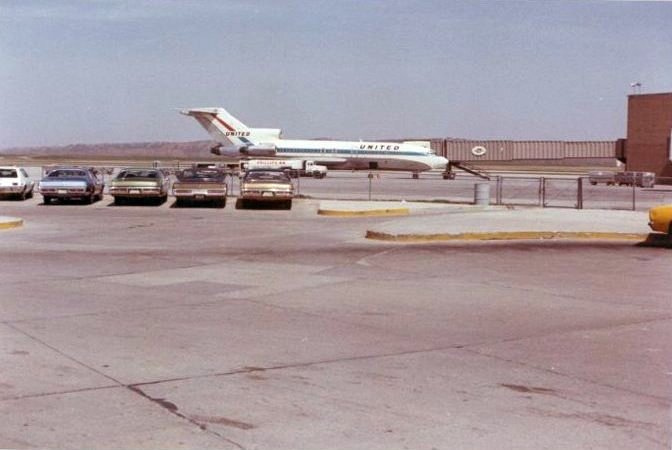
Eppley Airfield Omaha, Nebraska where my parents, two of my brothers and girlfriend (now wife) waited for my arrival…

13 Comments

Filed under Vietnam War