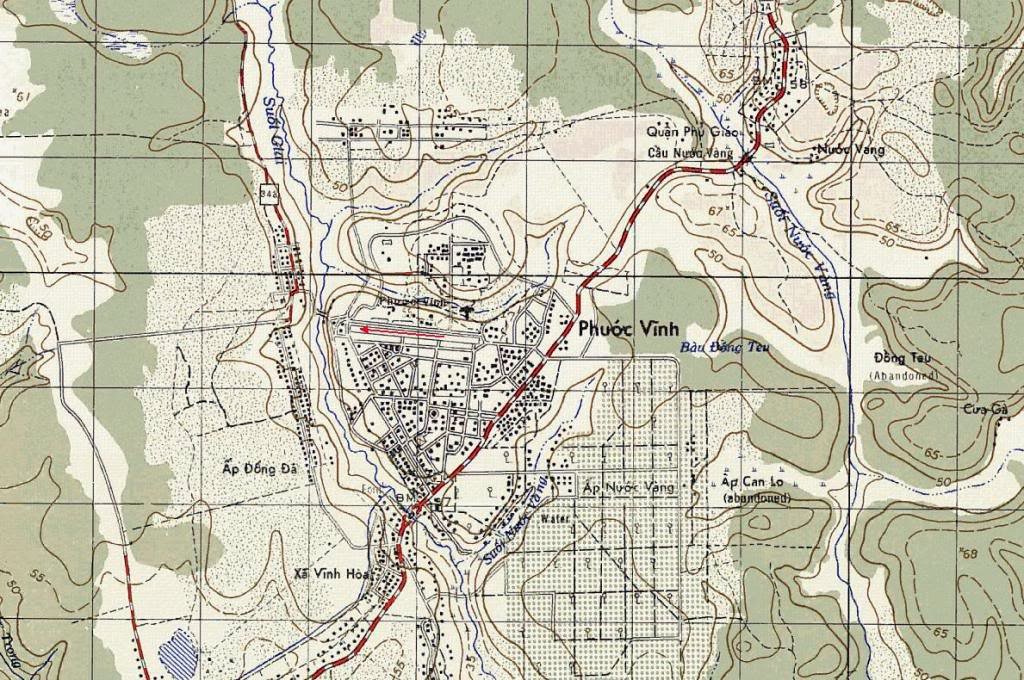
Phuoc Vinh Village


The Vietnamese People Continue their Traditional Way of Life

Phuoc Vinh firebase (Camp Gorvad) was next to the Village of Phuoc Vinh. Of course, that’s how it got its name.

When I arrived in Phuoc Vinh in March of 1970, we were allowed to go down to the village and hit the bars. My first time was with a couple of fellow Blues, and I got totally wasted on a Vietnamese beer called “33”. I remember holding a bottle of “33” up to a light, and you could see all kinds of stuff floating around in the bottle. That was my first and last encounter with “33”.

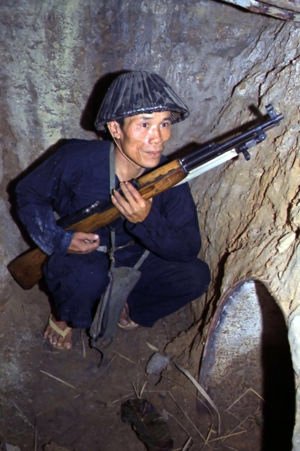
About a month later the village was off limits to GIs because of the violence…

3869655136_d822db29f4

Many of the Village People worked at our Phuoc Vinh firebase next to their village.

Oxen pulling a wooden cart was a familiar sight.

One of the few cars I saw in Vietnam.

securedownload copy

Photo courtesy of Ron Kidder
Ron was with the 720th Military Police attached to The 1st Infantry’s M.P. Company stationed in Phouc Vinh during Operation Junction City in 1967.

securedownload-2 copy 2

Photo courtesy of Ron Kidder

securedownload-2

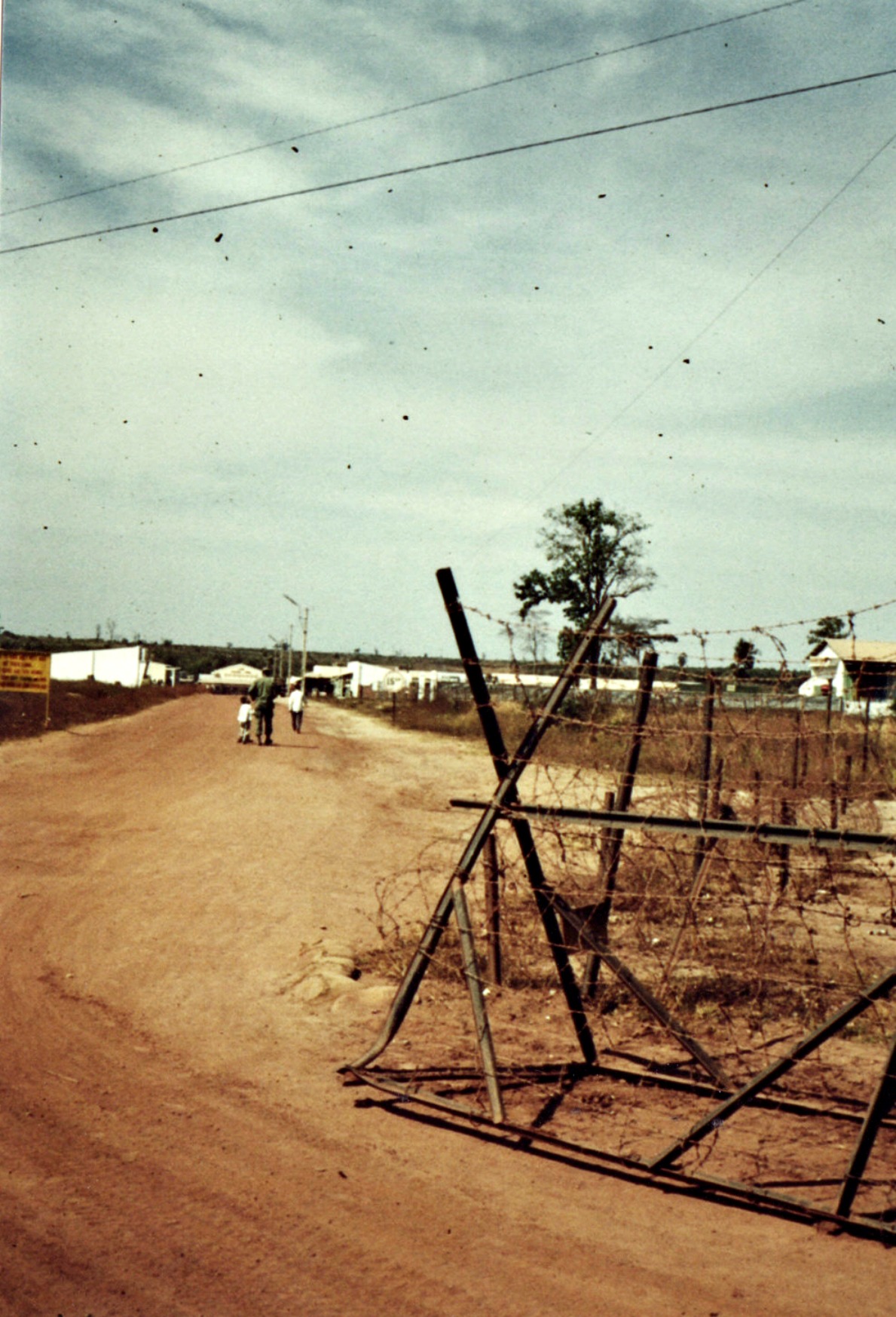
Looking down towards the market from the main gate
Photo courtesy of Ron Kidder

securedownload

Holding cell at 1st M.P. Quarters
Photo courtesy of Ron Kidder
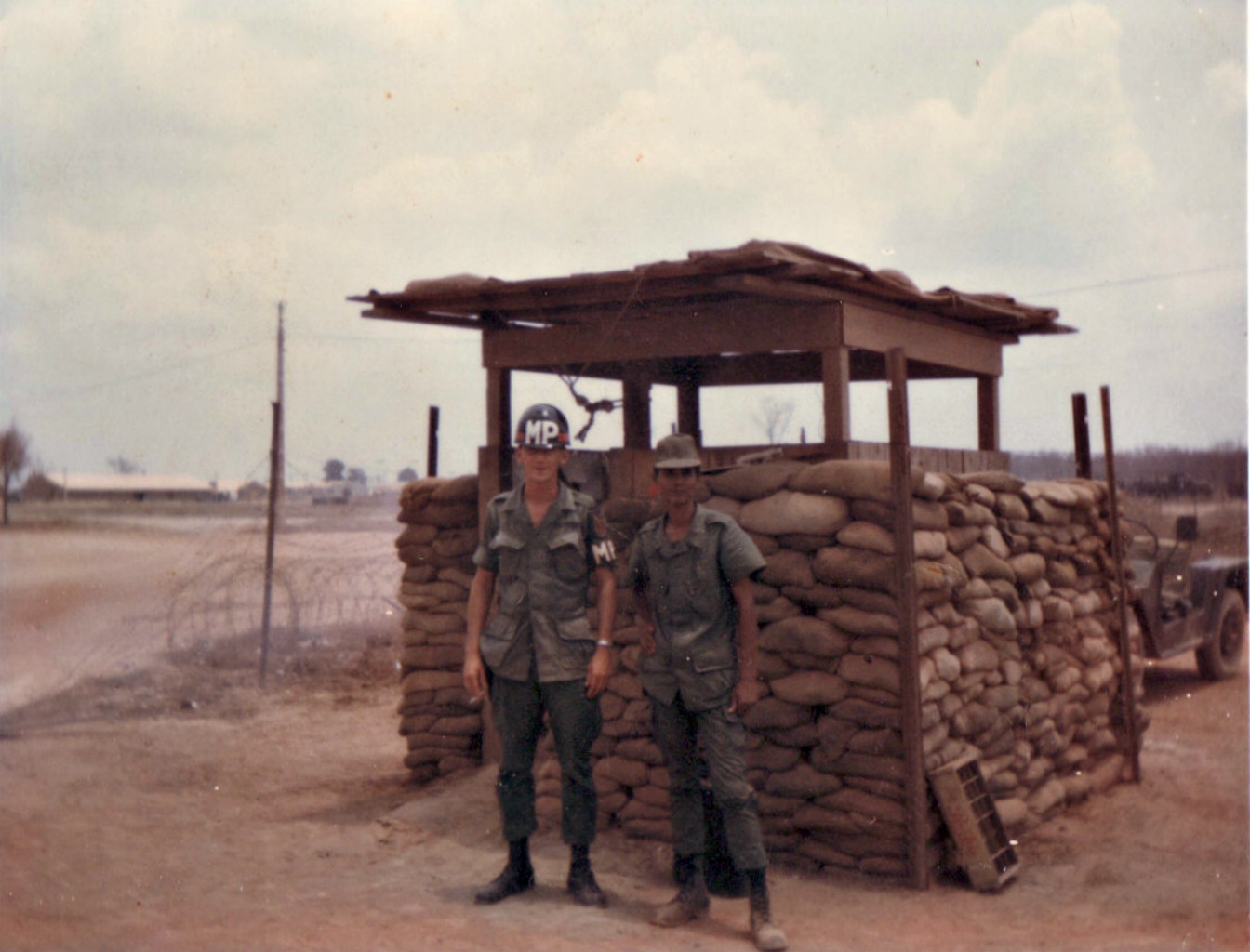
securedownload-2 copy

Main gate
Photo courtesy of Ron Kidder

securedownload-1 copy 2

M.P.’s from the 720th M.P. Battalion TDY during Junction City
Photo courtesy of Ron Kidder

securedownload-1 copy

Market Place
Photo courtesy of Ron Kidder

securedownload-3

The Hero Bar which sat just outside the main gate
Photo courtesy of Ron Kidder

securedownload-1

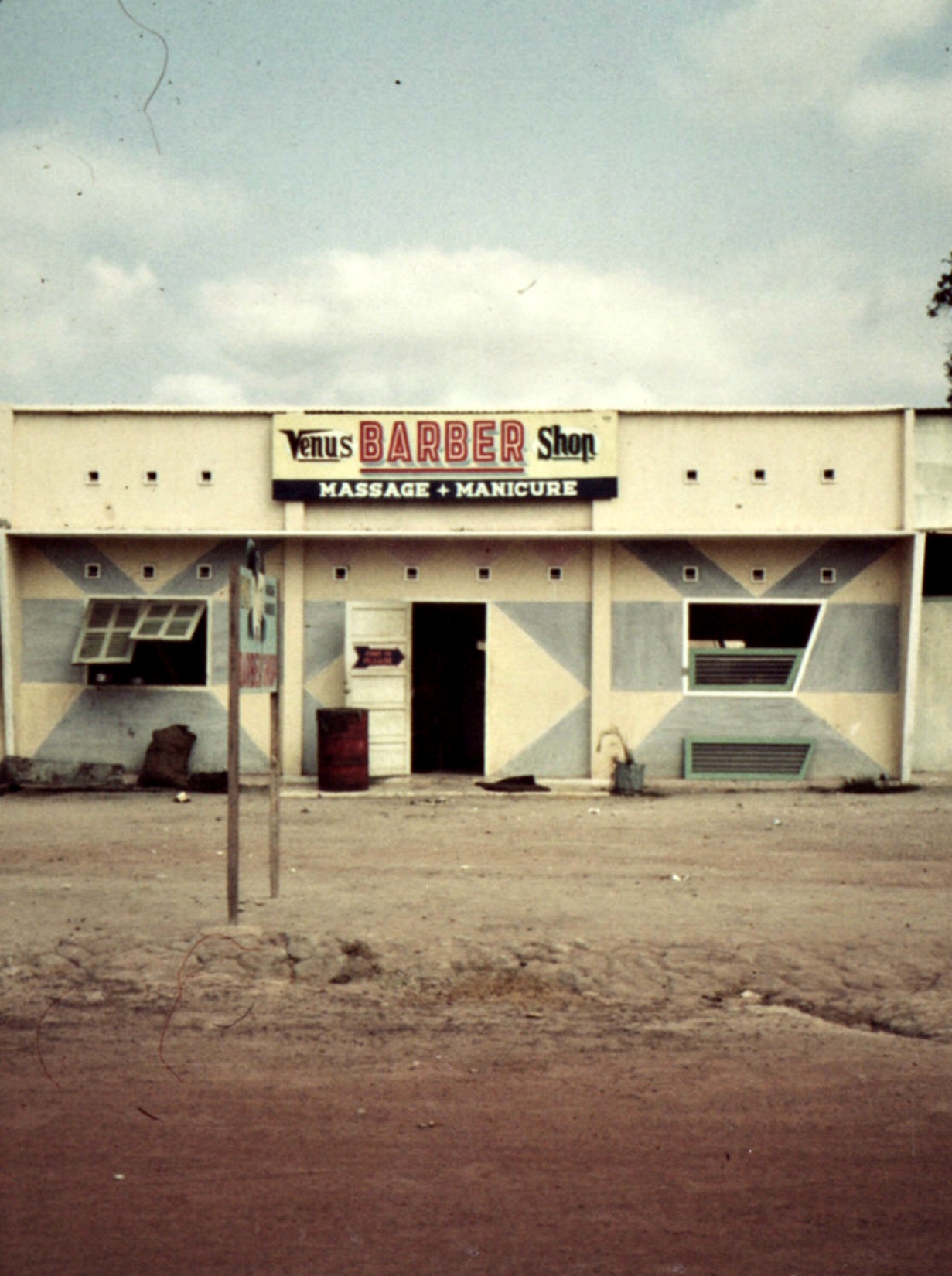
This young lady worked at the Venus Bar
Photo courtesy of Ron Kidder

164 Comments

Filed under Vietnam War

Getting Settled In My AO


AO (Area of Operation)

This picture of me was taken when I was a FNG (f**king new guy). You were referred to as a ‘FNG’ when you were new in Country. I can tell by the newness of my jungle boots and fatigues.

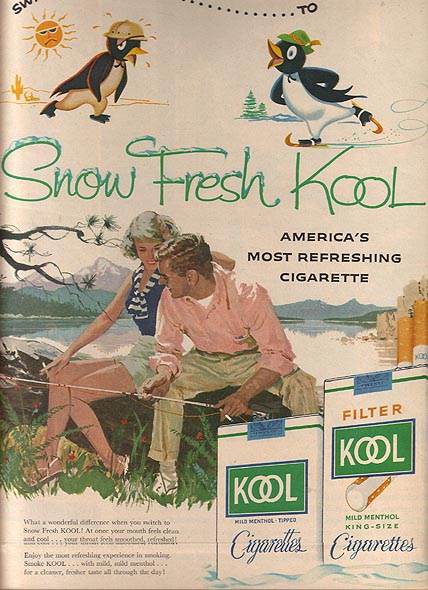
Looks like it’s time for a smoke. I smoked Kool Filters back then; would you believe I paid $2.00 a carton at the Base Exchange. That’s right, $2.00 a carton.

I also had one of those flip-top Zippo cigarette lighters. While on a recon mission I lost it in the jungle. That really bummed me out because I had it so long.

One night, about six months later at an EM club, my Zippo lighter resurfaced. A guy I didn’t know sitting at our table lit his cigarette with what looked like my lighter. I asked him where he got it, and he said he found it in the jungle. I got my lucky lighter back…

Leave a comment

Filed under Vietnam War

Charlie Troop Company Area


Our Living Quarters

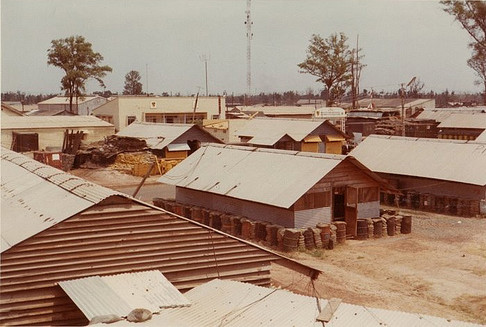
company area

We lived in a shack looking building, which was called a hooch. Each hooch housed about a dozen troops, and we slept on bunk beds with mosquito nets.These buildings were constructed primarily with tin (both siding and roof). Large barrels filled with sand and sand bags surrounded the building for some added protection against rocket attacks.

When I first got in Country, we got shelled (mortared) at least three times a day. It almost was more safe in the middle of the jungle on a recon mission.

We also had bunkers next to the hooch, where we scrambled to, in the event of a mortar attack. These bunkers were dug into the ground and constructed with lots of sandbags…

1 Comment

Filed under Vietnam War

We Land in Phuoc Vinh


My Home for the Next Thirteen Months

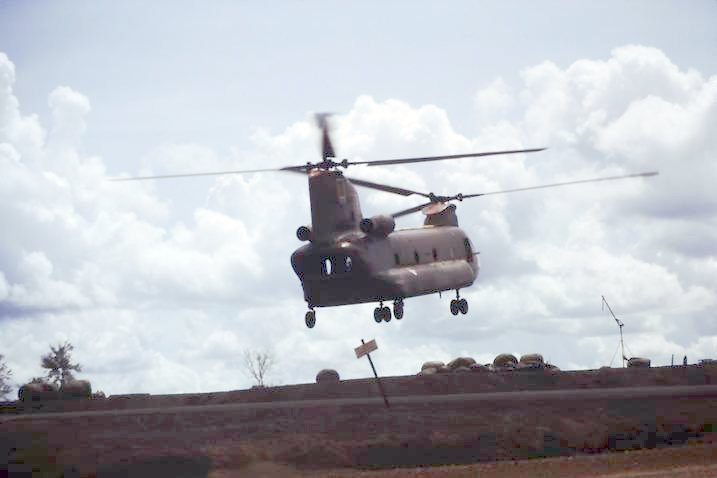
There is a good chance anyone riding in a Chinook helicopter these days wear earplugs. I didn’t see one single set of earplugs the whole time I was in Nam. Hearing protection was not a priority in a war zone.

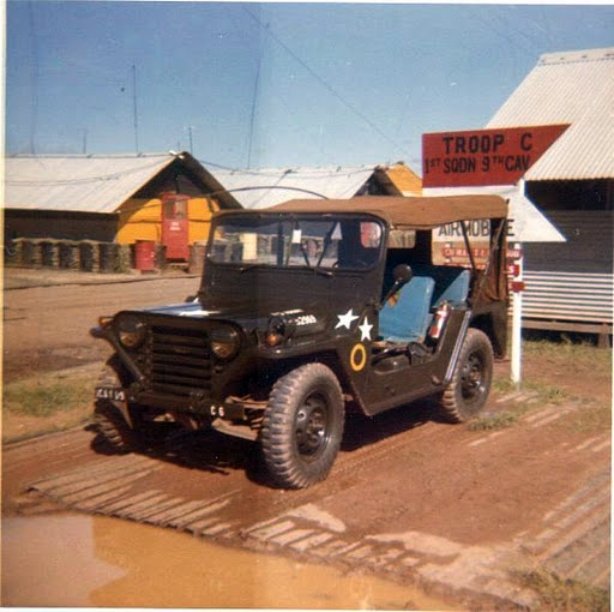
Charlie Troop apparently knew I was coming, because a guy in a 1/4-ton Jeep was waiting at the end of the runway to pick me up. I was assigned to the Charlie Troop Blues, so he took me to their company area. The ride was short, because it was right next to the landing strip.

When I arrived in the Company area a guy named Quintana showed me around and introduced me to some of the guys in the Blue platoon. He was a squad leader and little did he know then, had a short time left in Country. He broke his leg as he jumped from a chopper, while being inserted on a recon mission. That injury was his ticket back to the ‘World’. I was with him on that mission and thought that would be a great way to get out of this place…

6 Comments

Filed under Vietnam War

First Helicopter Ride


Flight to My Newly Assigned Unit in Phuoc Vinh

With my In-Country jungle training complete, it was time to move on to my new unit. I boarded a Chinook helicopter in Bien Hoa for a short flight to Phuoc Vinh, which was about 30 nautical miles north of Saigon and right at the edge of the foothills which rise into the Central Highlands.


The Chinook was the largest helicopter used in the war. Its primary roles include troop movement, artillery emplacement and battlefield resupply. It has a wide loading ramp at the rear of the fuselage and three external-cargo hooks. It was hard to believe that big aircraft could actually lift off the ground, not alone fly!

Leave a comment

Filed under Vietnam War

First Team Academy


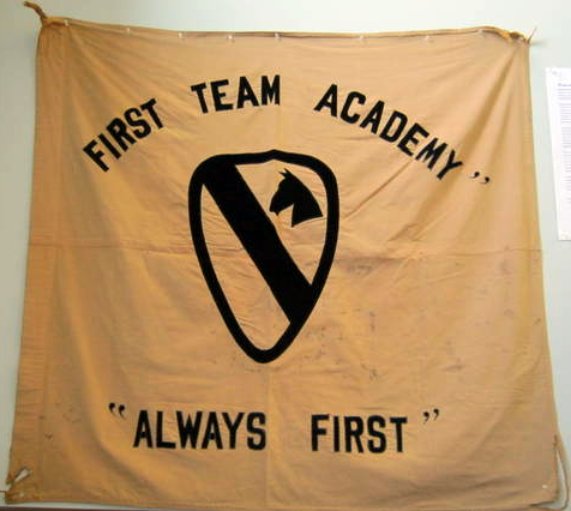
Flag brought back to the ‘World’ by Harley Higginson in 1971
(see Harley’s comments below)

In-Country Jungle Training

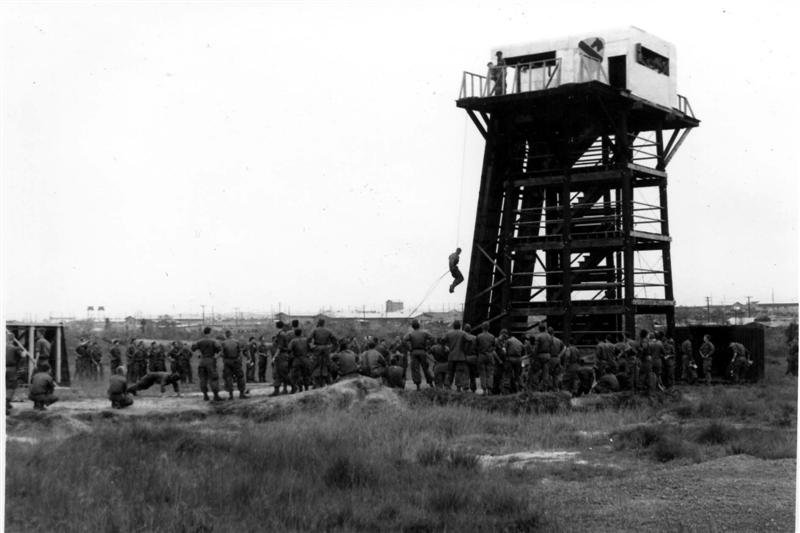
If assigned to an Infantry unit in the 1st Air Cavalry Division, you were given a week of In-Country training before being sent to your new unit. This training was at the First Team Academy in Bien Hoa.

There they issued you a M-16, spent time on the range zeroing the weapons, did some (rappelling, claymores, trip flares, etc.) They also showed us booby traps used by the Viet Cong and discussed the poisonous snakes in the region.

I recall the 45 foot rappelling tower, a little shaky going up that ladder. The first time I tried it, I went down head first. If I knew then, just how much rappelling I would do with C Troop 1/9, I would have made a few more trips up that tower.

With training complete, it was time to head north to Phuoc Vinh, the Headquarters for C Troop 1/9th…

13 Comments

Filed under Vietnam War

90th Replacement Battalion


Processing and Assignment in Long Binh
“They had you coming and going!”

12654543_10205741076986494_1387954957832624647_n

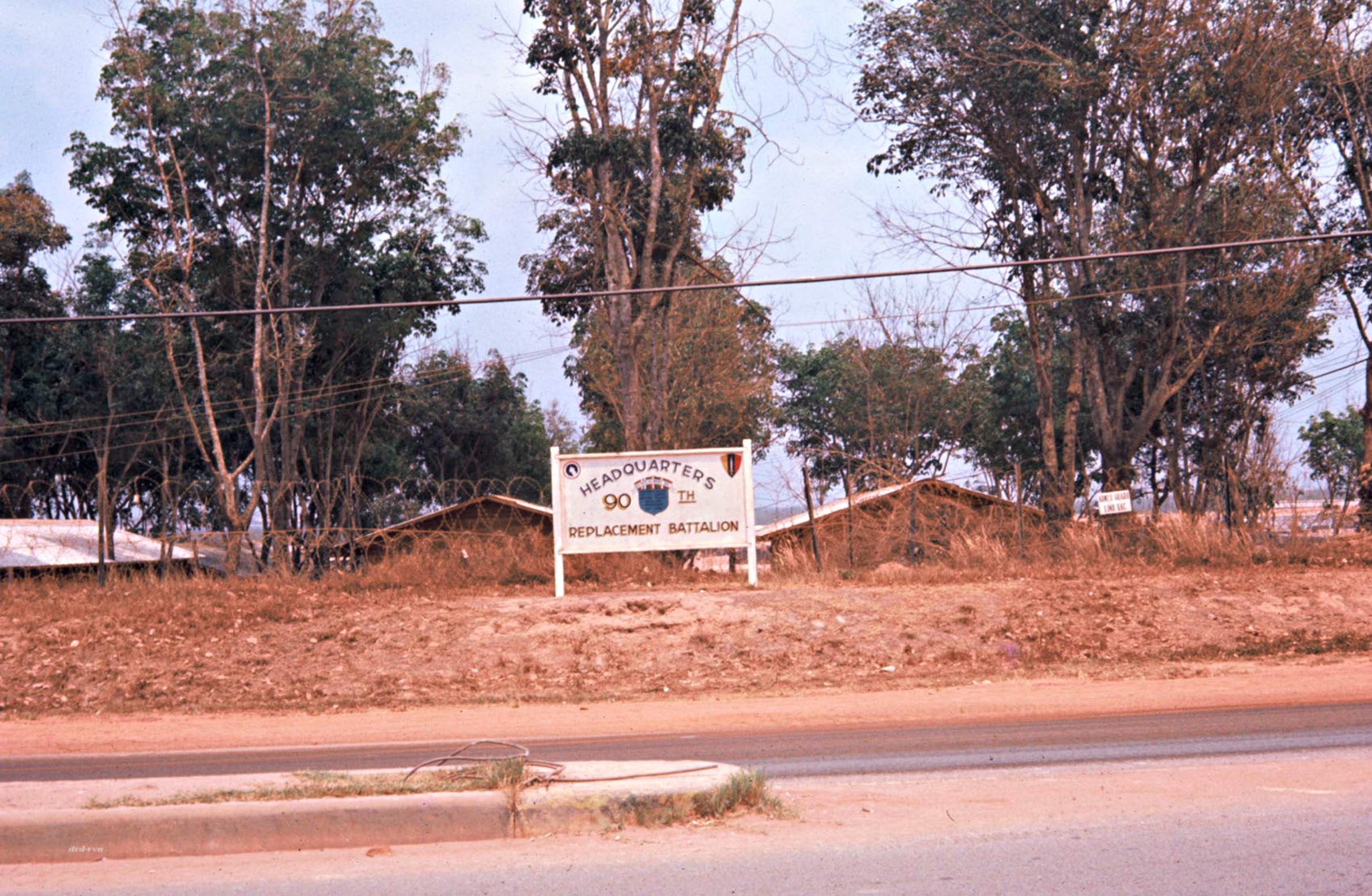
Entrance to the 90th Replacement Battalion in Long Binh, 24 June 1971.
Photo by Sp5 Logan L. McMinn, DASPO

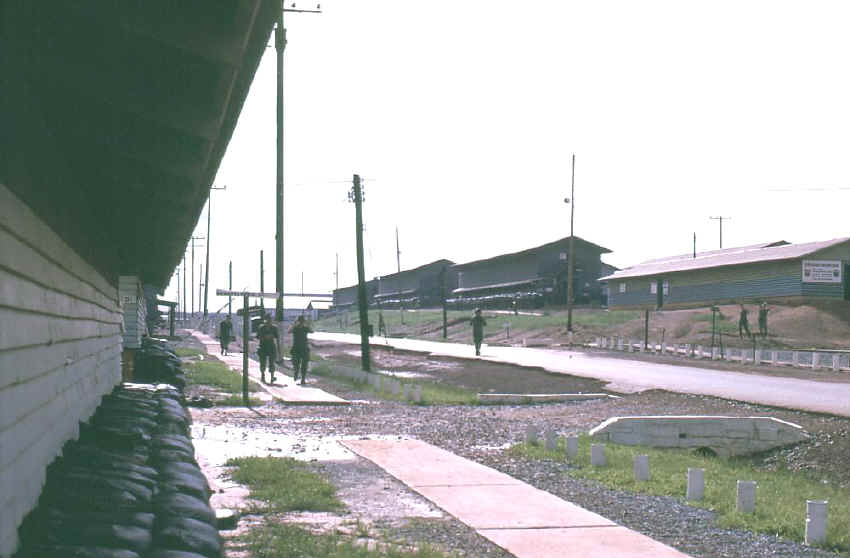
VIETNAM 90th Replacement Entrance Road

There were a couple of buses at the Bien Hoa Air Base patiently awaiting our arrival to take us to our next destination. That was 90th Replacement Battalion, situated on the road to Saigon between the village of Bien Hoa and the huge base at Long Binh. There we would be assigned a unit we would serve with in Vietnam.
The bus ride to 90th Replacement was relatively short and everyone seemed exhausted from the long flight.

VIETNAM 90th Replacement Barracks

When we arrived, we filed off the busses and were assigned to barracks where we were to await processing and assignment. We were marched into the long building, which had a concrete floor, wooden walls that were built with each slat at an angle so the wind could blow through and ventilate the building, wire screen on the inside of the walls and a tin roof.

VIETNAM 90th Replacement PX

90th Replacement Post Exchange

The next morning after chowing down at the mess hall, we all lined up on the parade field where they called names of those who have been assigned a unit. These were called shipping formations and were held every two or three hours. My name was not called the first day, so I had to wait at least another day to find out where I was going.

That night two of us were assigned perimeter guard duty. Around the perimeter of each firebase, there were bunkers constructed with sand bags where you stand watch for any enemy infiltration. The other guy with me said just a week ago a sapper came through the perimeter wire and slit the throats of the guys on our bunker. I figured he just made that story up, so I would stay up all night and pull his watch while he slept. Well, it worked, as I didn’t get one wink of sleep.

There was rumors floating around, that our units up north were experiencing heavy casualties. I just had a feeling, I would be one of their replacements, especially with my MOS of 11 Delta (recon).

VIETNAM 90th Replacement Out-processing

The next day as a large group of us was lined up in formation, the guy next to me offered me a chew. I did smoke at that time, but had never tried a chew before. I accepted his offer and put a small wad of Red Man in my mouth. Just as my name was called with orders for my new unit, everything started spinning around me. I heaved my last two meals all over the parade field. Needless to say, that was a moment of great embarrassment!

Call it a case of the nerves or the affects of chewing tobacco on my system, or maybe a combination of both, I just received orders to report to C Troop, 1st Squadron, 9th Cavalry, 1st Air Cavalry Division…

RVN-097 copy

Photos courtesy of SP4 David Ross Diser (Payroll Specialist
90th Replacement Battalion, 12/10/66-12/01/67)

541 Comments

Filed under Vietnam War

MPC (Military Payment Certificate)


GI’s used the MPC for Transactions in Vietnam

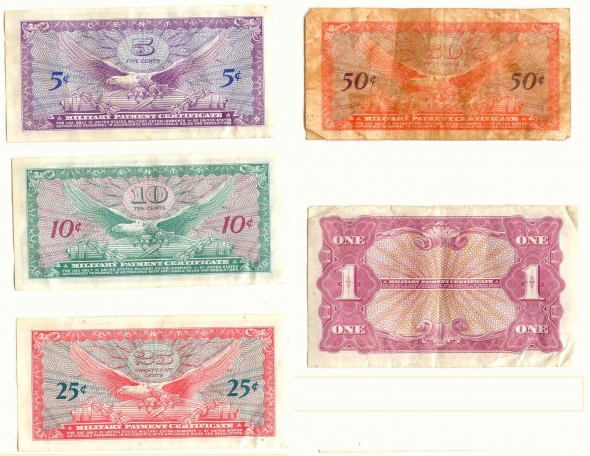
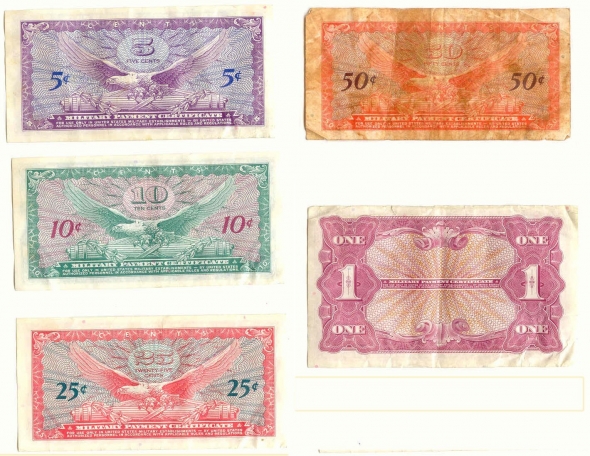
One of the first things we had to do in Vietnam was trade our ‘Greenbacks‘ in for MPC currency.

MPCs were paper money denominated in amounts of 5 cents, 10 cents, 25 cents, 50 cents, 1 dollar, 5 dollars, 10 dollars, and starting in 1968 20 dollars. MPCs were fully convertible to US dollars upon leaving a designated MPC zone and convertible to local currencies when going on leave (but not vice-versa), and were illegal for unauthorized personnel to possess, thus, in theory, eliminating US dollars from local economies.

Military Payment Certificates, or MPC, were used from the end of World War II until the end of the Vietnam War, between the years 1946 and 1973. MPC’s utilized layers of line lithography to create colorful banknotes that could be produced cheaply. Fifteen series of MPC’s were created but only 13 series were issued…

draft_lens4275592module38491022photo_1244381736mpc-back

draft_lens4275592module38491022photo_1244381736mpc-backdraft_lens4275592module38491022photo_1244381736mpc-backdraft_lens4275592module38491022photo_1244381736mpc-back

29 Comments

Filed under Vietnam War

Vietnam Bound


Setting Foot on Foreign Soil


After a grueling hour and forty minutes on a broken down Greyhound bus that was probably built before I was born, we arrived at Travis Air Force Base in California. There we boarded a huge cargo plane. I don’t remember the model, but they told us the only plane larger was the B-52 Bombers.

The flight was long (about twenty-two hours) with two stops before reaching our destination, which was Bien Hoa Air Base in Vietnam. Our first stop was Anchorage, Alaska and then Yokota Air Base in Japan. It was night time and very dark when we landed in Bien Hoa. This was one of the first US bases built during the Vietnam War. The air base was one of the busiest airports in the world during the war.

10311744_10203062432551030_3218076666616800474_n

The door of the plane was opened, and immediately I was bombarded by the heat. The intense humidity made my uniform stick to me and was quite uncomfortable. There was a smell in the air which seemed to be a combination of garbage and urine, with just the hint of disinfectant.
We were now in a foreign land, very foreign indeed…

7 Comments

Filed under Vietnam War

Journey to Vietnam Begins


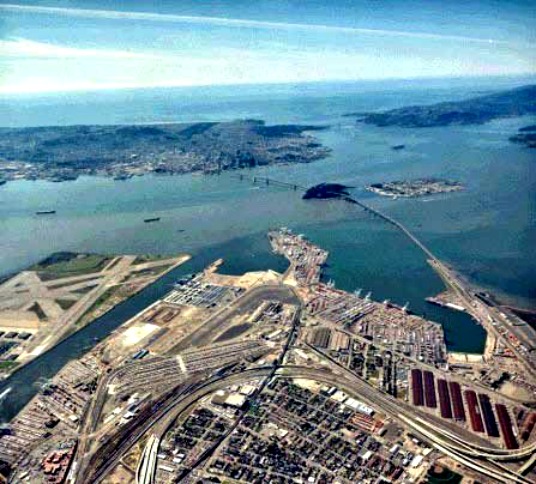
First Stop was Oakland Army Base in Oakland, CA

5006194951_f97f553b46_o1

That two-week​ leave just flew by and time for my departure had arrived.
Mom, dad and little brother (Randy) took me to Eppley Airfield in Omaha to begin my journey. We stopped in Charter Oak on the way so I could say goodbye to my girlfriend (now wife) Rebecca.

We landed at Oakland Army Base (US Army Overseas Replacement Station) that afternoon. That is where troops heading to and from Vietnam got processed. After a short briefing, we were shown our sleeping quarters for the next couple of nights. There must have been a shortage of boarding space because we slept on folding Army cots on the floor of a huge warehouse. That could have been a sign the war in Vietnam was escalating at a rapid pace and any space available was used to accommodate the huge influx of troops.

The next couple of days consisted mainly of filling out necessary paperwork and of course, getting fitted for jungle fatigues and boots.

One thing that stood out in my mind is the look the returning vets had on their faces. I couldn’t understand why they weren’t smiling and happy. After all, they were going home, or at least to a new duty station back in the world. Instead, they looked worn and burned out. Thirteen months later I understood…

6 Comments

Filed under Vietnam War